Metal Roof Coating
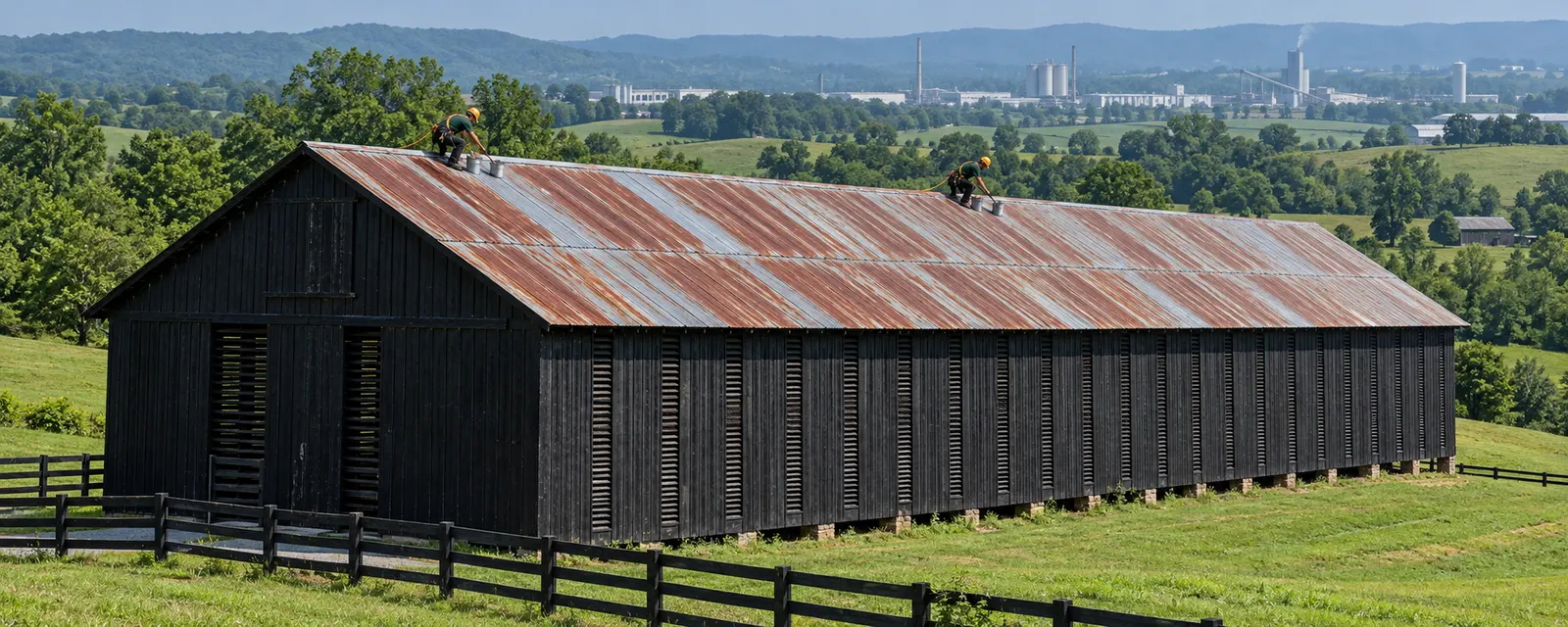
Steel panels with rusty screws, open laps, and faded paint get rust treatment, fastener work, lap sealing, and a two-coat system across the field.
Metal Roof Coating in Georgetown
Commercial roof coating services in Georgetown and nearby towns: metal, silicone, acrylic, spray foam, and shingle systems, each matched to the roof it goes on.
Pick the system by the roof, the slope, and how the building is used. Each card links to a full page.
Steel panels with rusty screws, open laps, and faded paint get rust treatment, fastener work, lap sealing, and a two-coat system across the field.
Metal Roof Coating in Georgetown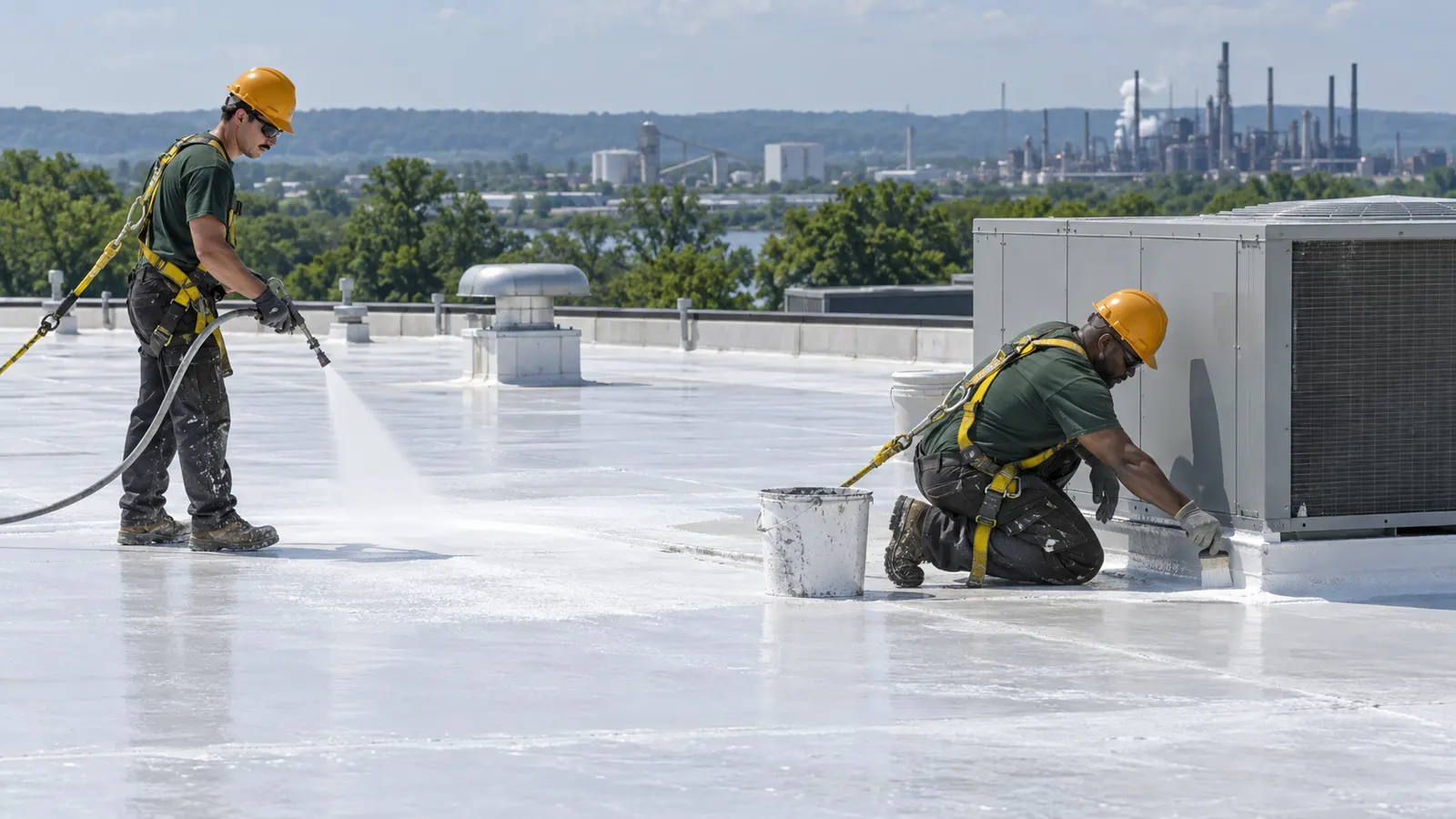
Silicone fits low-slope metal that holds water after rain. It resists ponding, cures in cooler damp air, and is recoated later with silicone only.
Silicone Roof Coating in Georgetown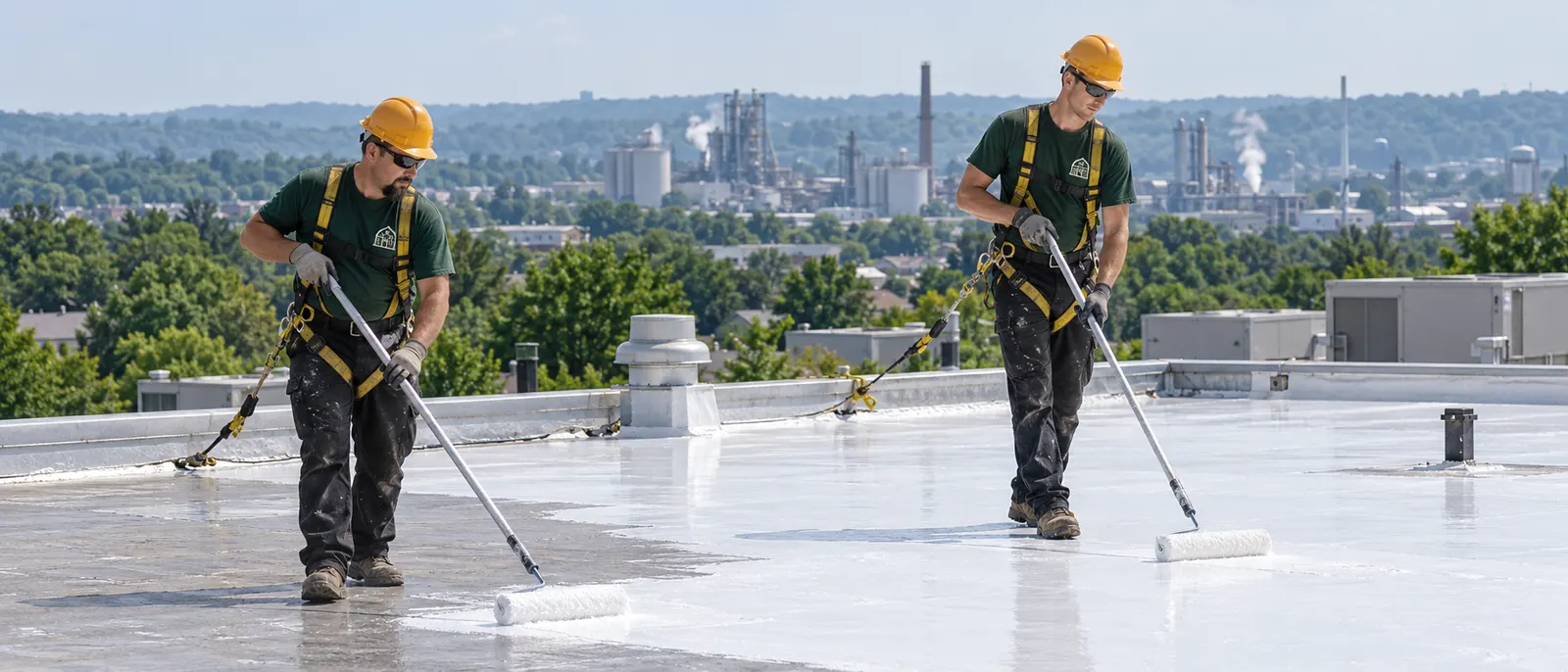
Pitched shop, barn, and warehouse roofs that drain quickly get a water-based acrylic. It needs dry, warm days to cure and accepts many topcoats later.
Acrylic Roof Coating in Georgetown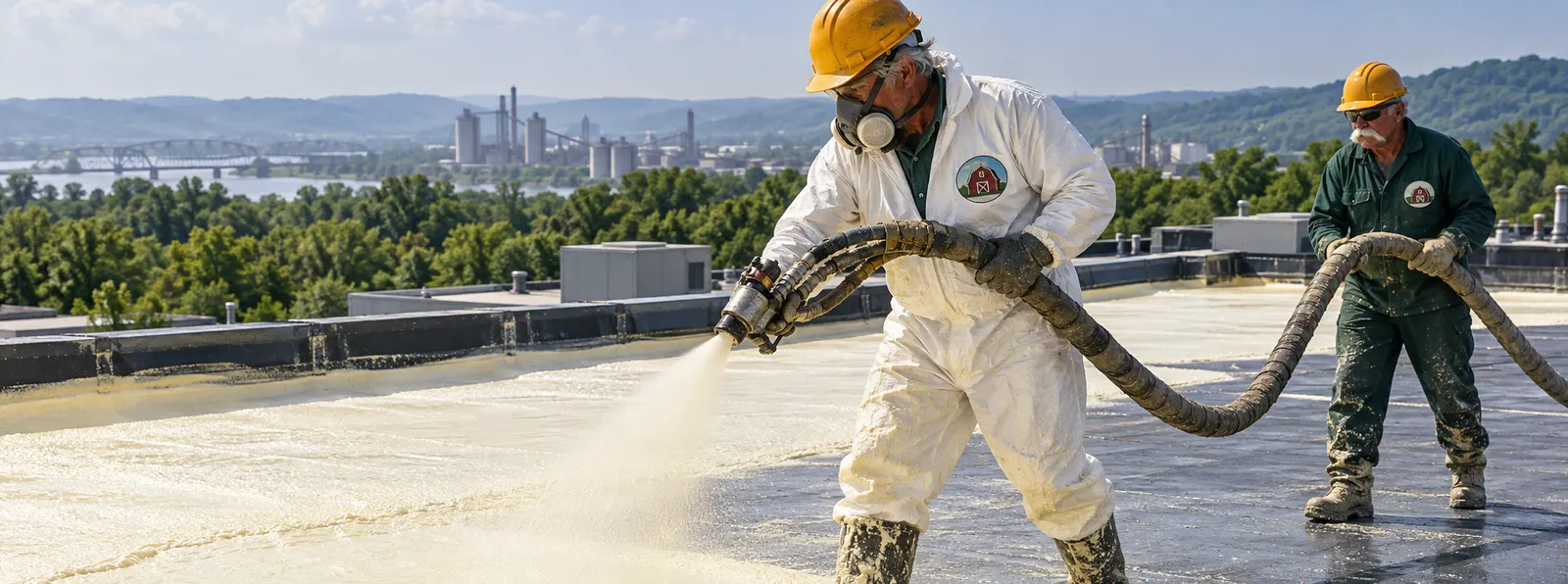
Closed-cell foam adds insulation at about R-6 per inch, fills panel corrugations, and buries fasteners, then takes a coating to protect it from sunlight.
Spray Foam Roofing in Georgetown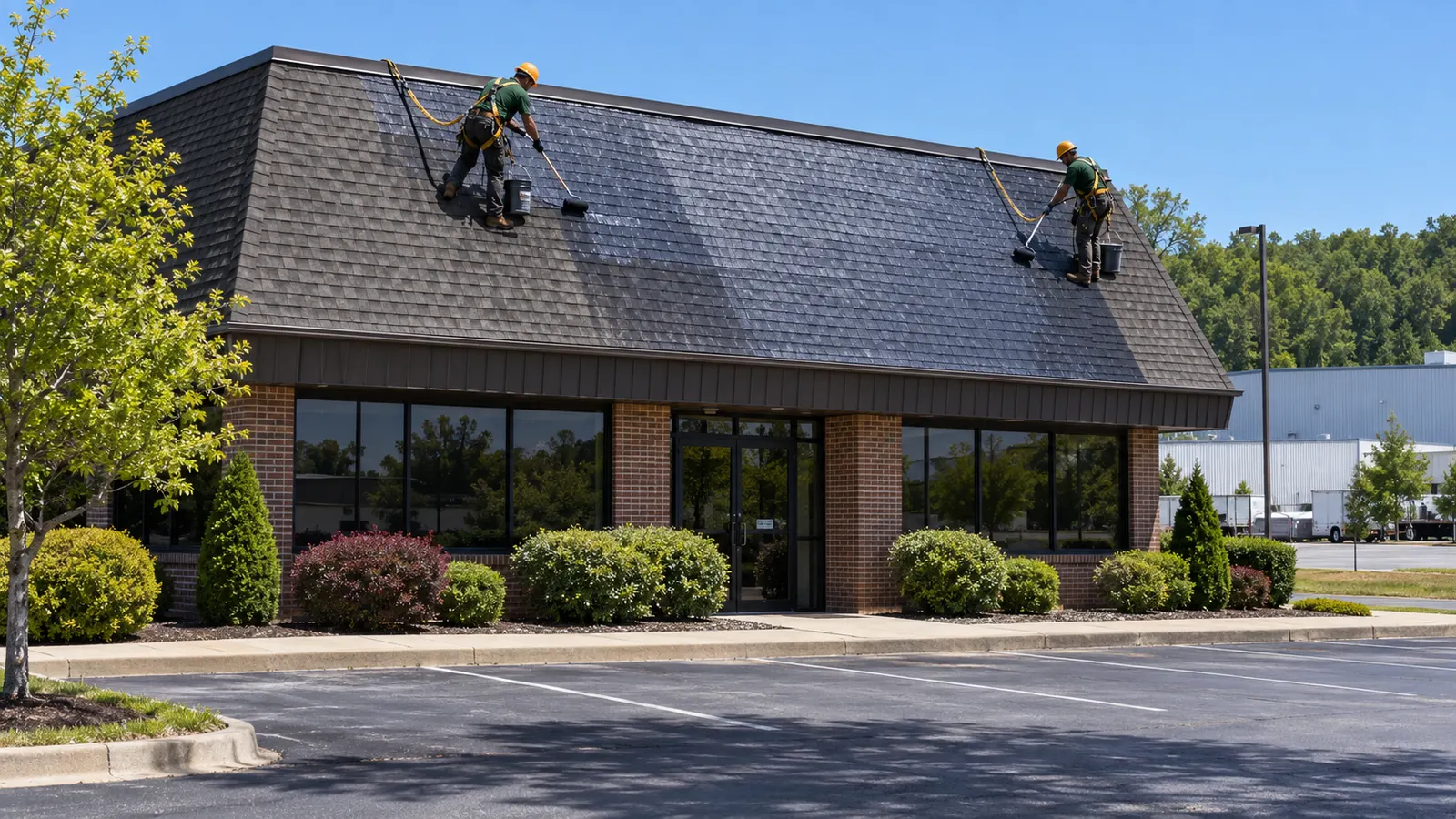
Flat, granule-covered shingles on strip centers, offices, and churches take a thin flexible coating once the shingle or coating maker approves the product.
Shingle Roof Coating in GeorgetownA side-by-side look at the five systems. The product data sheet from the chosen maker settles the final pick.
| System | Best Roof | Standing Water | Cure Weather | Recoat Later |
|---|---|---|---|---|
| Metal roof coating | R-panel and standing seam steel | Depends on the topcoat chosen | Within the maker range, dew-free panels | Same family of product |
| Silicone | Low-slope metal and flat sections | Resists ponding | Cooler, damp air is fine | Silicone over silicone |
| Acrylic | Pitched metal that sheds water | Softens under ponding | Dry, warm days | Accepts many topcoats |
| Spray foam | Metal buildings that run hot or cold | Foam can be tapered to drain | Dry surface, calm air | Recoat the topcoat |
| Shingle coating | Flat shingles that hold granules | Built for sloped shingles | Dry days per the maker | Per the shingle coating maker |
Tell us the roof slope, the panel type, and where water collects. A free estimate starts with a walk of the roof, and the system is chosen from what we find there.
The same order of work applies to every system; the materials change at the coating steps.
Panels, screws, laps, gutters, curbs, and skylights get checked from above, and the deck and insulation from below where access allows. Rust grade and moisture decide which system fits.
On The Roof
Slope, ponding, insulation needs, and how the building runs point to metal coating, silicone, acrylic, foam, or a shingle coating. Product data sheets set primers and thickness.
PaperworkWashing, rust grinding, and priming come first. Screws, laps, curbs, and skylight edges get detail work, and old pitch pans are cleaned and refilled before any field coat.
On The Roof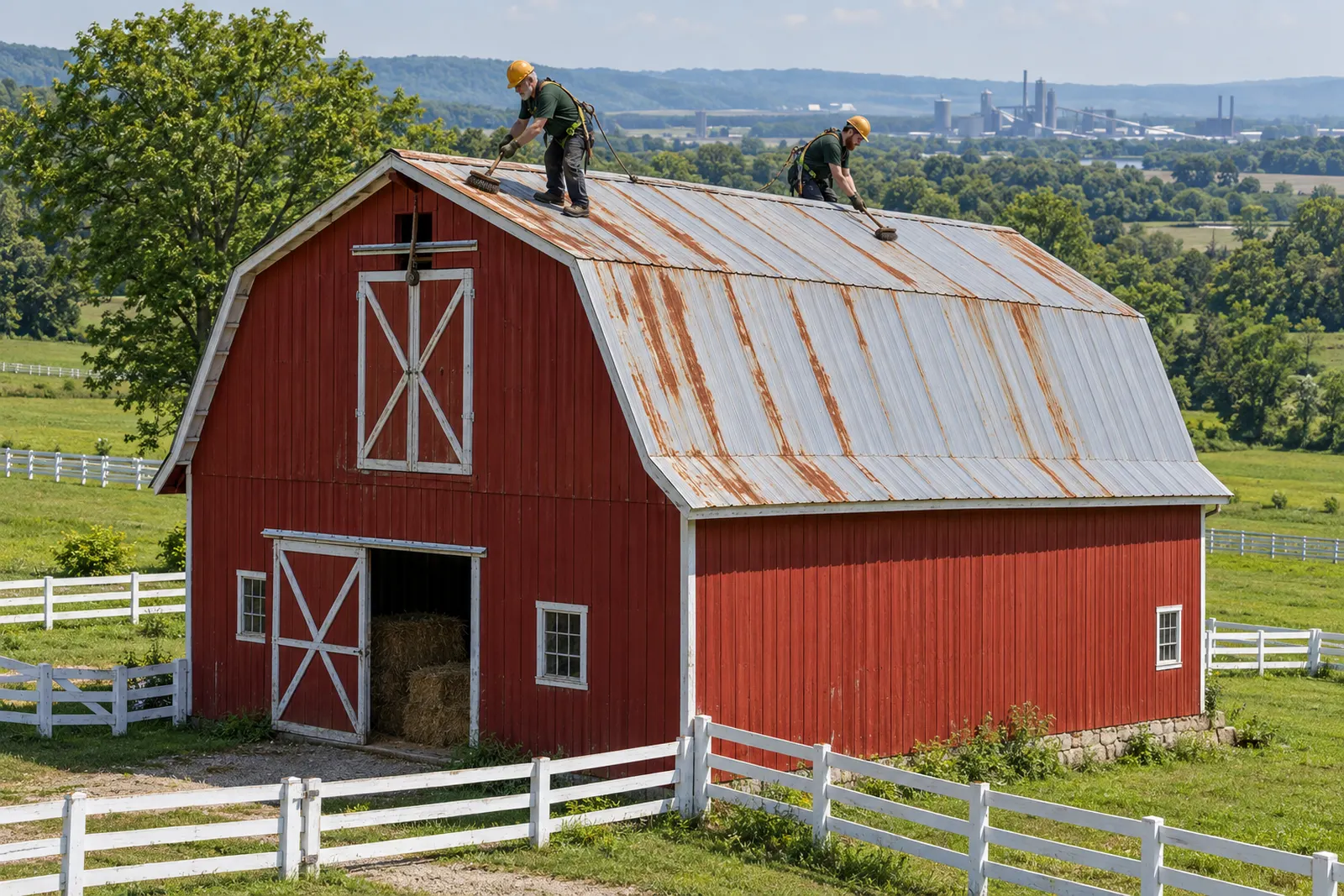
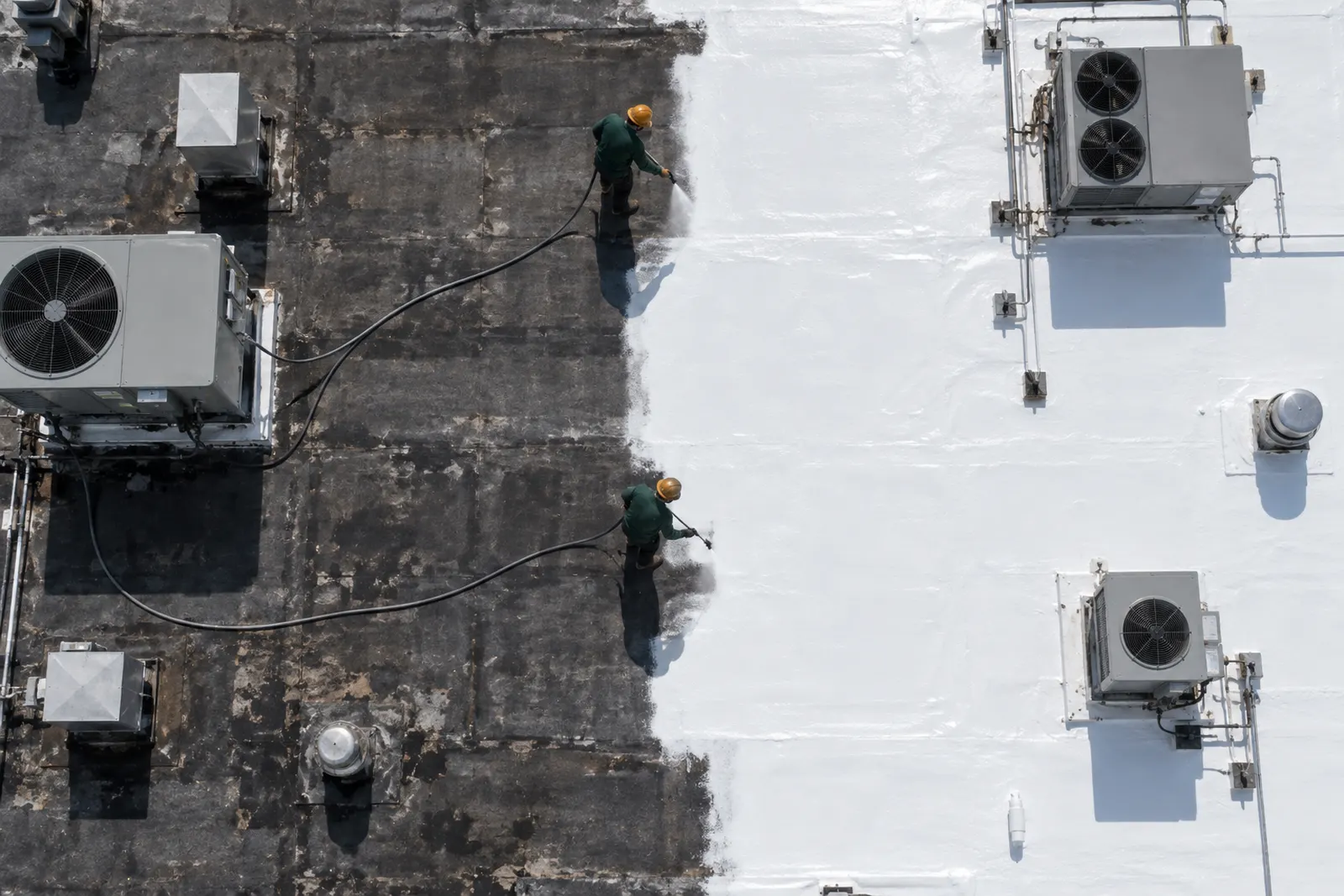
Each section is coated while the rest of the roof stays as it was, so a section can be finished before weather turns. Rooftop units near spraying are shut down at their disconnects.
At The BuildingGauge readings, a walk of the finished roof, and photos of each section close the job. Owners get the product names and thickness for future recoats.
PaperworkCost drivers, timing, taxes, and upkeep, answered for Scott County building owners.
It comes down to how much steel is still intact. Coating fits faded or leaking panels with solid steel. Restoring adds new screws, spot panel swaps, and new trim where rust-through is scattered. Re-paneling puts new panels over sound purlins when rust-through is widespread, and full replacement is for failed purlins, wet insulation, or structural damage.
Late spring through early fall gives the most reliable coating weather, with warm days and drier stretches between storms. Morning dew sits on panels after sunrise, so coating starts once the surface dries. Silicone tolerates cooler weather and stretches the season into fall, and July and August work shifts toward mornings because hot panels climb past product limits.
Each curb, unit, and pipe gets detailed before the field coat, because these are common leak points. Curb seams get fabric and a heavier coat at the panel ribs, cracked pipe boots are replaced, and old pitch pans are refilled. Units are shut off near spraying, and coating stops short of service panels and condensate drains.
Roof size, rust level, and fastener count drive most of it. Exposed screws mean labor at every head, heavy rust means more grinding and priming, and each curb, pipe, and skylight adds detail work. Access matters too: roof height, lift needs, and ground traffic. Spray foam adds material and labor along with its insulation value.
Roofs on existing nonresidential buildings can qualify, per IRS Publication 946, which lists roofs among improvements made after a building was first placed in service. For tax years beginning in 2026 the cap is $2,560,000. Whether a coating counts as an improvement or a repair is a question for your CPA, so keep itemized invoices.
Check the name on your bill, since the meter location decides it. Kentucky Utilities, Blue Grass Energy, and Owen Electric each list Scott County in their territory, Blue Grass Energy covers Woodford and Harrison counties, and Owen Electric covers Grant County. Program offerings change and none comes with a roof job, so ask the utility directly.
At least once a year and after any big hail or wind storm. A fall check catches leaf-packed gutters before winter, and a spring check finds freeze-thaw damage at laps. Look for coating worn thin at ribs and walkways, cracks at ridge caps and curbs, rust returning at screws, and dirt dulling a white finish.
We will look at the panels, screws, and laps, then tell you which coating system fits your building.
Leave a name and number and we will call to talk through the leak, rust, or coating question. Or call us now at (502) 293-5467.