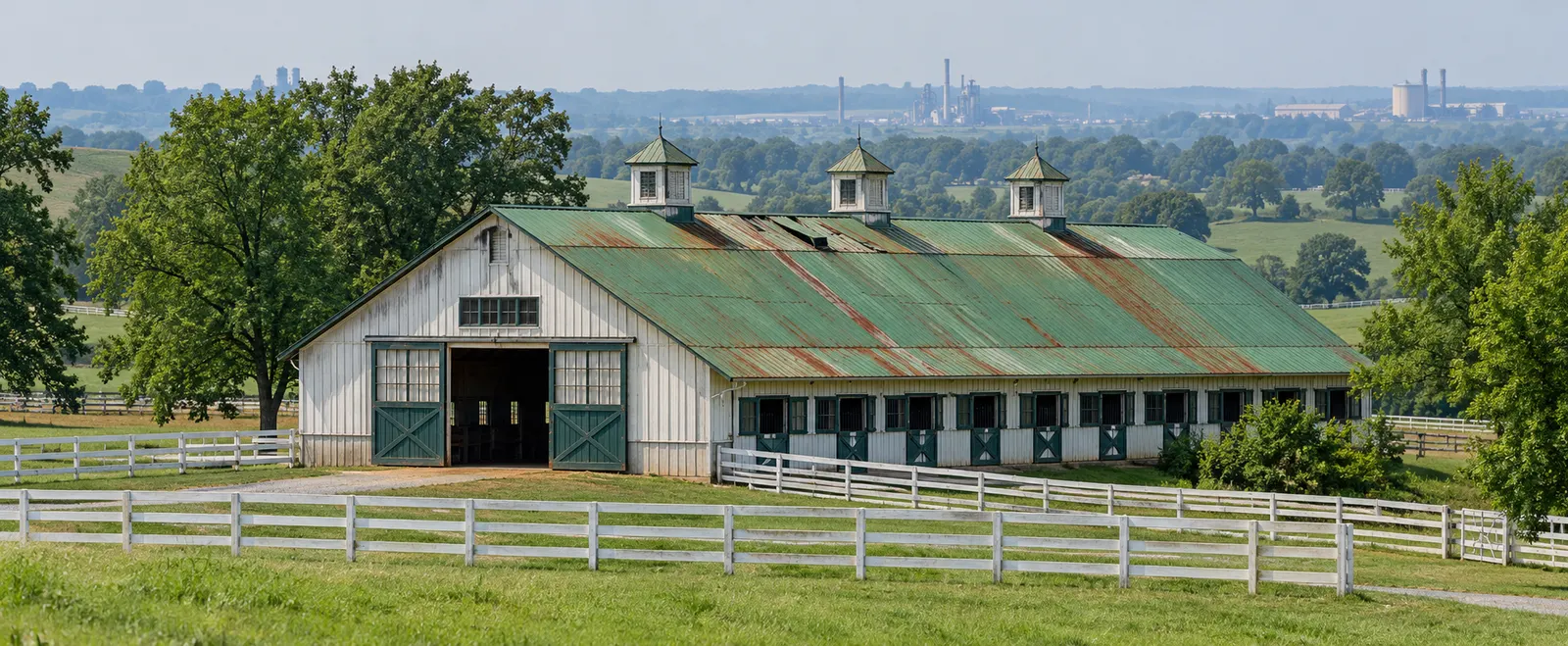
Gabled Barns
Acrylic Over The Barn Roof
Steep gabled barn roofs that shed water fast take water-based acrylic after rust treatment and screw work, with vents and daylight panels left open.
Acrylic coating details
Midway metal roof coating for barns, equipment sheds, and farm shops that stay in use, with washing and spraying planned around animals, feed, and open vents.
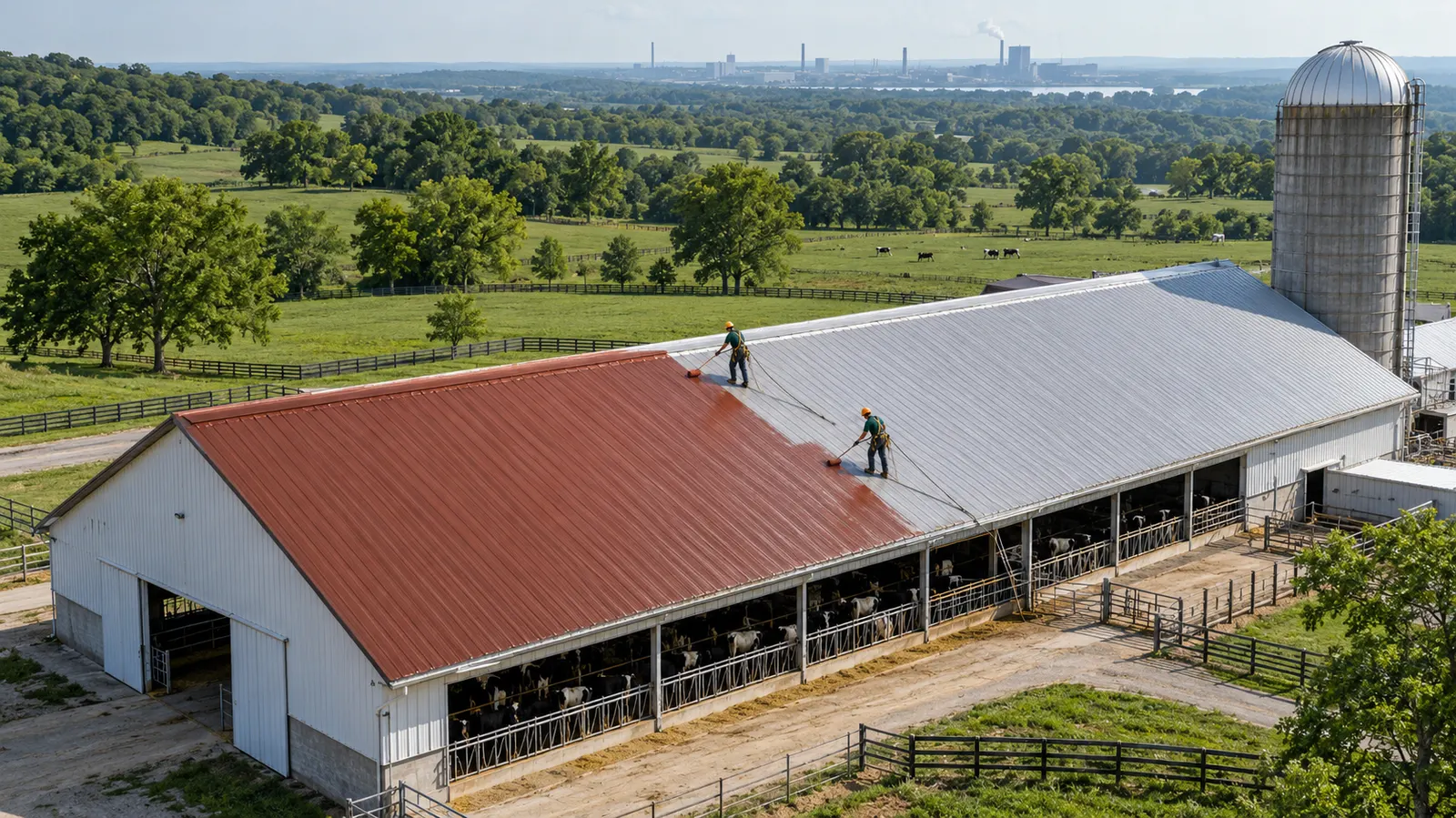
Most barns and equipment sheds on Woodford County farms around Midway never empty out for a roof job. Horses, cattle, hay, and machinery stay inside, so the work is planned around them from the first walk.
Washing and spraying happen one section at a time. Animals and feed move away from the drip line under that section, gutter outlets that drain into paddocks are rerouted for rinse water, and water-based acrylic keeps odor down inside the barn.
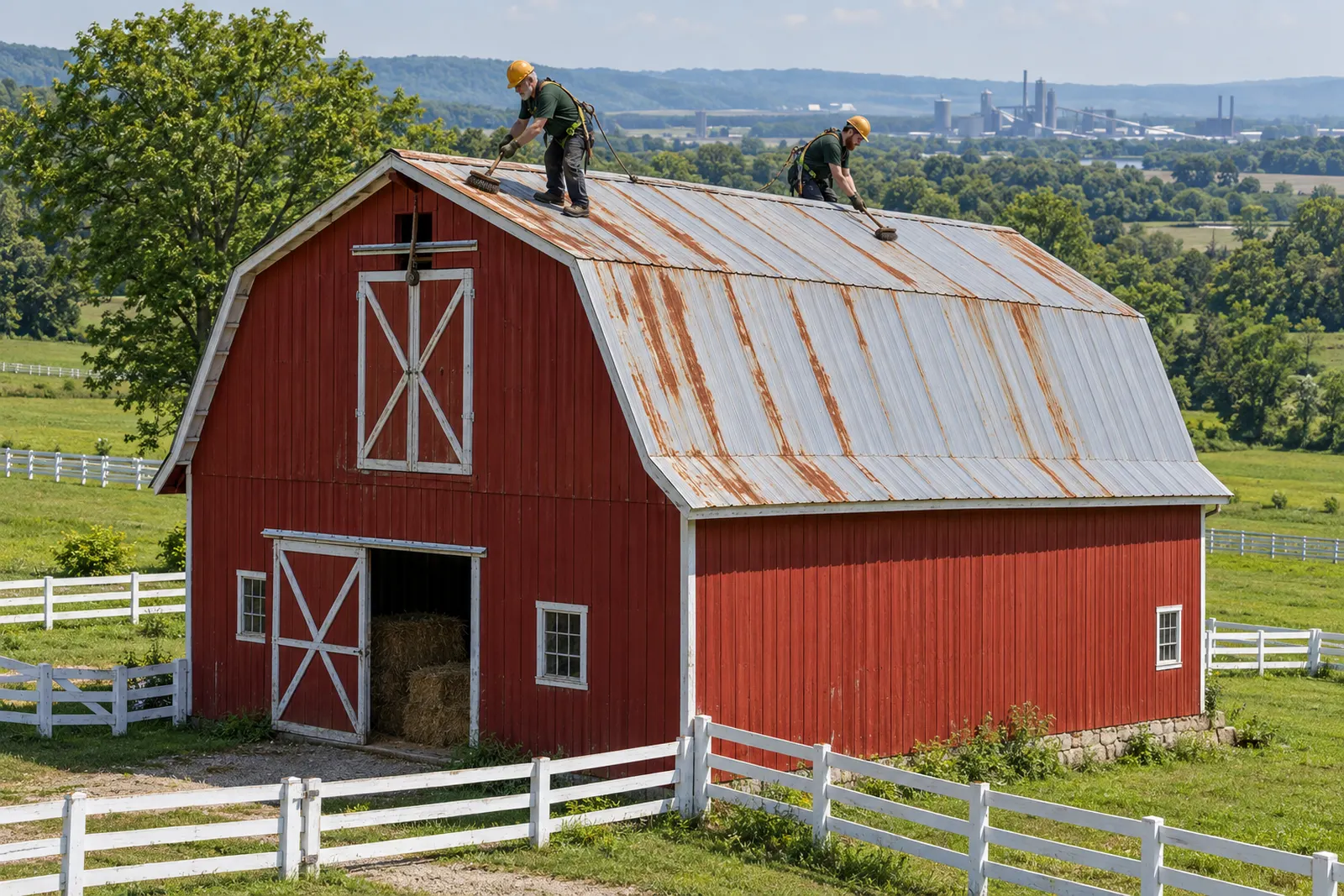
Long gabled farm roofs fail in the same five places. Each zone gets its own prep before coating.
Open ridge vents let barns breathe, and they stay that way. Coating stops short of the vent slots, and loose ridge-cap screws beside them are tightened and sealed.
Translucent roof panels light barn aisles and stalls. They are kept clear of coating, and brittle or cracked ones are replaced with new panels before the job.
Gabled barn roofs often run long from ridge to eave in a single pitch. End laps partway down collect runoff from the whole run and get sealed full width.
Damp air from stalls and manure areas speeds rust along the eaves and lower panel courses. That steel is brushed, primed, and checked for holes before the base coat.
Outlets on barn gutters often empty into paddocks or lots. During washing, those outlets are blocked or redirected so rinse water and old paint chips stay out of fields and troughs.
What a coating does for a Midway barn or farm shop with solid framing.
Sealed screws and laps stop the drips that spoil hay, rust machinery, and wet bedding in the aisles below the roof.
Primer and coating over the eaves and laps hold back the rust that damp barn air feeds along the lowest panel courses.
Water-based acrylic keeps fumes down inside occupied barns, and work moves section by section so animals settle in the stalls away from the crew.
A white topcoat reflects more summer sun than faded or rusty steel, which keeps the panels cooler over stalls and equipment.
Three common jobs on Midway-area farm and commercial buildings.
Steep gabled barn roofs that shed water fast take water-based acrylic after rust treatment and screw work, with vents and daylight panels left open.
Acrylic coating details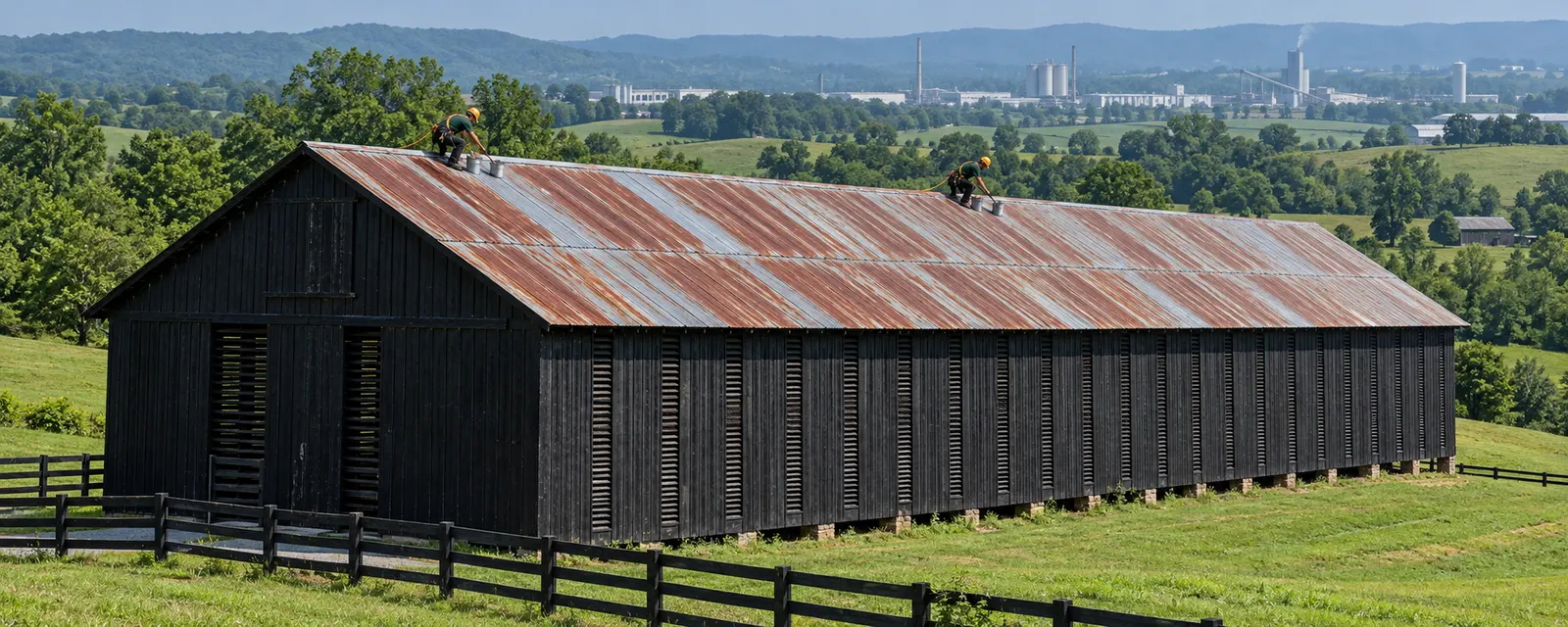
Open-front equipment sheds with rusty end laps and ridge caps get full metal roof prep and a two-coat system across the panels.
Metal roof coating details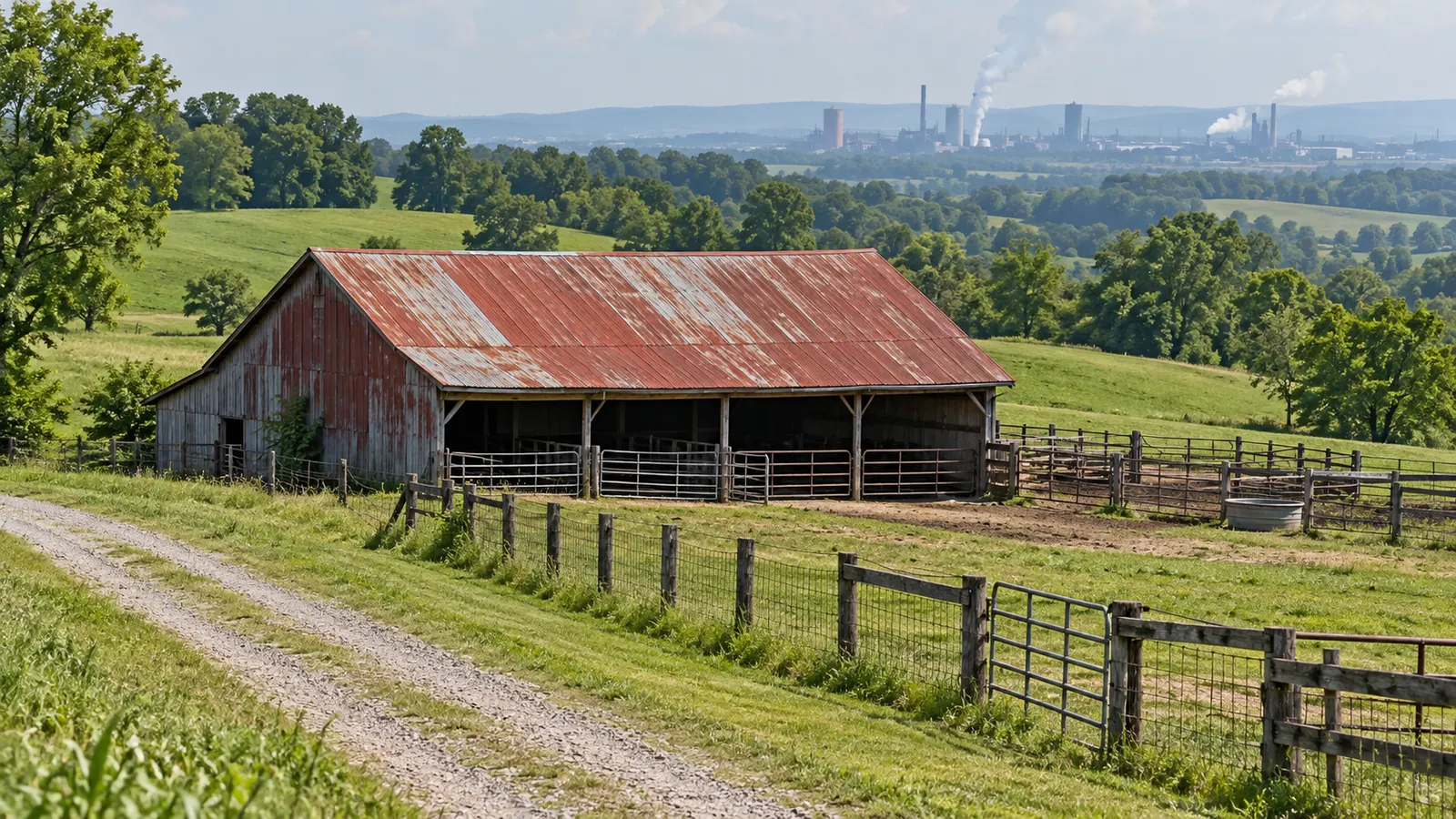
Shops where farm equipment is repaired through winter can take spray foam over the panels for insulation, then a topcoat.
Spray foam roofing detailsCall and tell us what the building holds, how the animals move, and where the drips land. We will plan the roof walk around your chores.
Five steps, each one planned around animals, feed, and farm traffic.
We walk the roof with you, note ridge vents and daylight panels, check screws and laps, and look at the eaves above stalls. Inside, we look for wet hay, rusty purlins, and drip stains.
On The Roof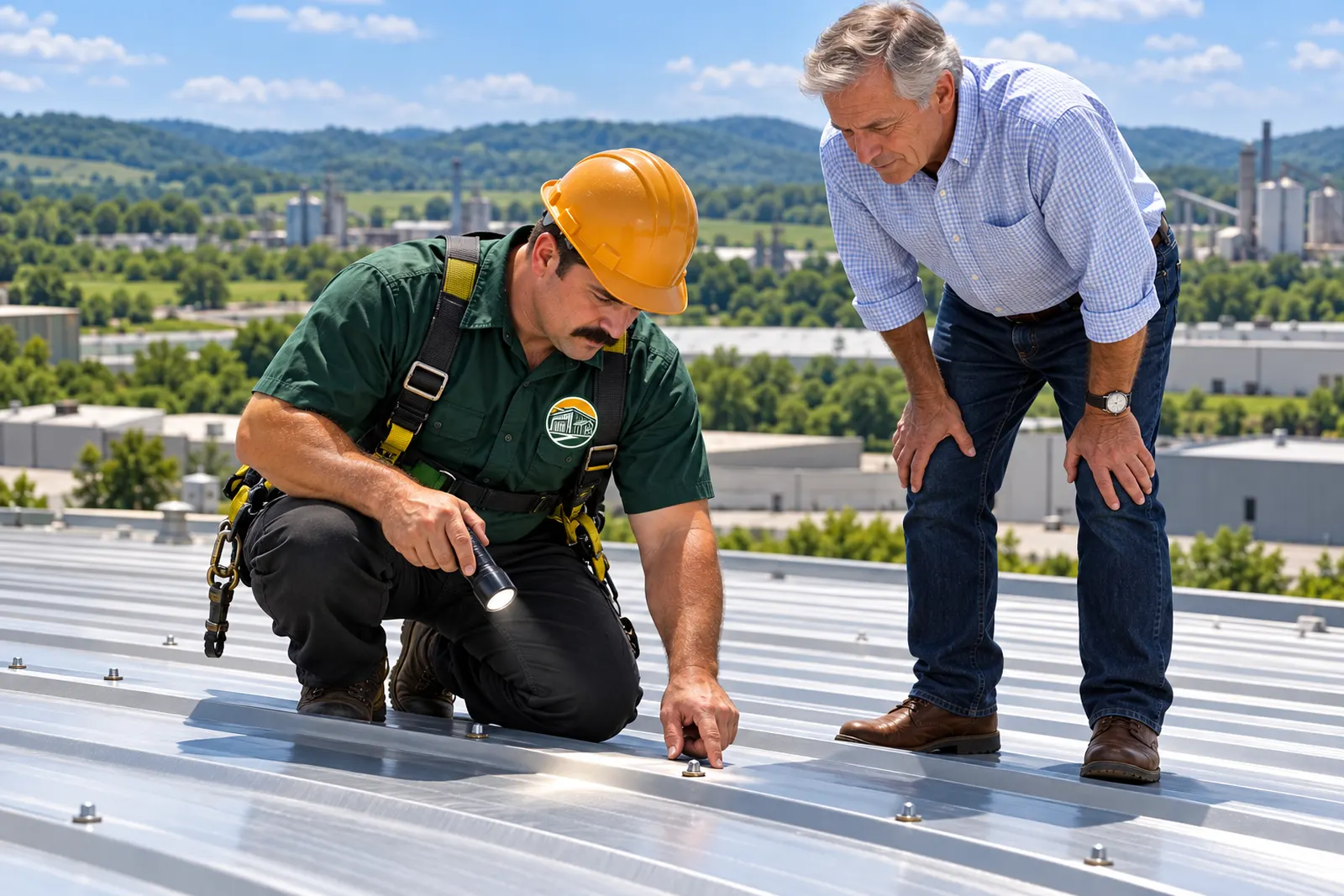
Roof sections are scheduled so animals and feed can move clear of each drip line in turn. Gates, lanes, and lift placement are agreed before washing day.
At The Building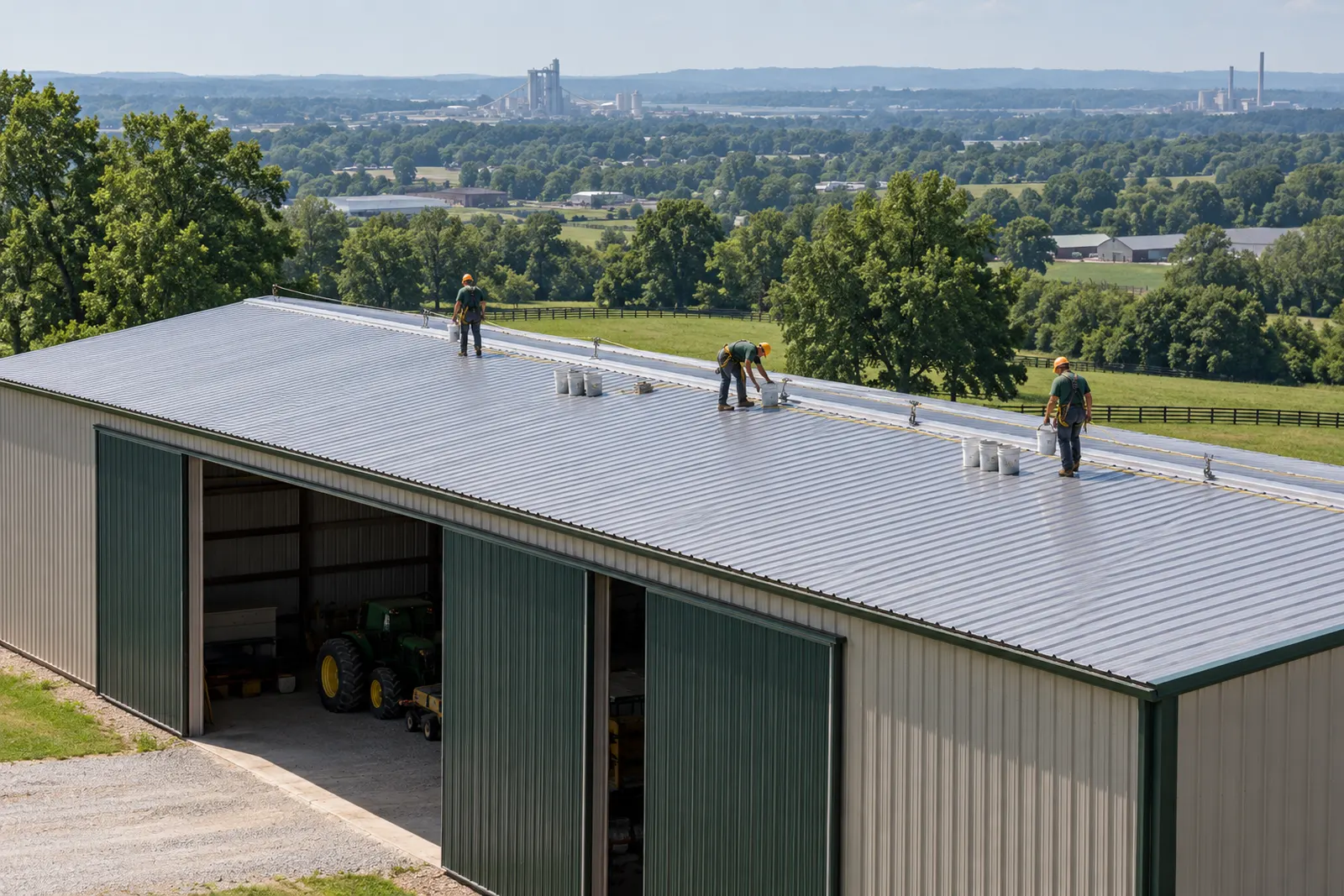
Washing runs one section at a time, with gutter outlets blocked or redirected so rinse water stays out of paddocks and troughs.
On The RoofRust is brushed and primed, screws are sealed, laps get fabric, and water-based acrylic goes on, stopping short of vents and translucent panels.
On The RoofEach section reopens once the coating has set. Photos, product names, and gauge readings go to the owner for later recoats.
PaperworkIs your farm or shop outside Midway? Call us or send us a message; we also coat commercial metal roofs in these towns.
| Town | County | What We See On Roofs There |
|---|---|---|
| GeorgetownHome Base | Scott County | Plant, warehouse, and shop roofs where long panel runs and exhaust fans set the prep list. |
| Cynthiana | Harrison County | Commercial buildings near the Licking River where gutter size and outlets get checked first. |
| Williamstown | Grant County | Metal buildings on open lots along I-75 where wind and freeze-thaw loosen trim. |
Permits, barns, and farm schedules for Woodford County buildings.
Midway sits in Woodford County, so it answers to a different permit office than Georgetown. The Kentucky Department of Housing, Buildings and Construction lists a Woodford County local building inspector and assigns a state inspector to the county. Panel replacement, new skylight panels, or foam that raises the roof edge are the items most likely to need a permit.
Ventilation, animal safety, and long-span roof details. Ridge vents have to stay open, so coating stops short of the slots. Translucent panels are kept clear, animals and feed move away from the drip line during washing and spraying, and gutter outlets that drain into paddocks are handled before rinse water flows.
Water-based acrylic is the usual pick for steep gabled barn roofs that shed water quickly, because it keeps odor low around animals and stays bright white. Low-slope lean-tos or sections with standing water get silicone instead, and heated tack rooms or shops can take spray foam over the panels.
Yes. The roof is split into sections, and animals and feed move clear of each section drip line before washing and spraying start there. Most barns keep running, with chores and turnout scheduled around the section being worked that day.
Blue Grass Energy lists Woodford County in its service area, though the name on the bill decides it. Utility questions matter on a roof job mainly for rooftop units and exhaust fans, which are shut off at their disconnects before spraying nearby.
Yes. Shops, offices, and storage buildings in and around town get the same roof walk and prep as farm buildings. Metal roofs on those buildings often need screw and lap work, and flat rear sections can take silicone where water stays after rain.
Tell us what the building holds and where it leaks, and we will set up a roof walk that fits your farm schedule.
Leave a name and number and we will call to talk through the leak, rust, or coating question. Or call us now at (502) 293-5467.