Foam Over Metal · Georgetown, KY

Georgetown Spray Foam Roofing

Spray foam roofing for Georgetown metal buildings that run hot, run cold, or leak at hundreds of screws: closed-cell foam over the panels, then a protective topcoat.

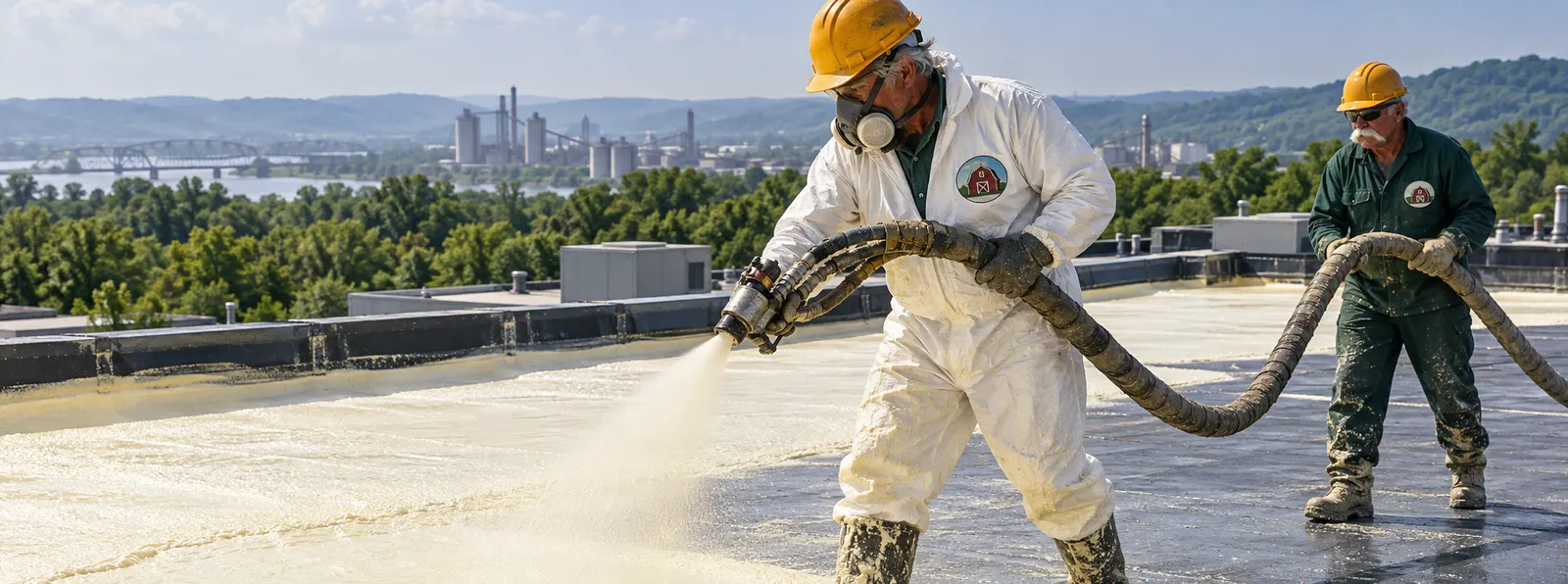
Crew spraying closed-cell foam over metal roof panels
  • Closed-Cell Foam Over Panels
  • About R-6 Per Inch
  • Screws Buried Under Foam
  • Code Points Checked First

Is This Roof A Fit?

Foam makes sense when a metal building needs insulation as well as a dry roof. These lists show when to foam and when a coating alone is enough.

Good Signs For Foam

  • Uninsulated shops and warehouses that bake in summer
  • Buildings that are hard to heat in winter
  • R-panel roofs with leaks at many screws and laps
  • Low spots that tapered foam can fill
  • Panels and purlins that are still solid

A Coating Alone Or Other Work First

  • Panels that leak on a building with enough insulation
  • Wet insulation or a wet deck under the panels
  • Rust-through that needs panels replaced first
  • Roof edges where added height would block doors or windows
  • Air intakes that have to keep running during spraying

What Foam Changes On A Metal Roof

Foam reshapes the roof surface. These are the five parts of a metal building that change once inches of foam go on.

Corrugations

Closed-cell foam fills the ribs and valleys of the panels and leaves a smooth, continuous surface. Water stops running in channels toward end laps, and the laps themselves are buried.

Screw Heads

Every exposed screw ends up under continuous foam instead of being sealed one by one. Loose and stripped screws are still fixed first so the panels stay tight under the new layer.

Edges And Trim

Inches of foam raise the roof edge, so gutters, ridge caps, eave trim, and rake trim are adjusted or extended. Counterflashing at walls is reset to the new height.

Curbs And Intakes

Overspray travels, so rooftop unit intakes are shut down and covered, and parking under the work area is cleared. Curbs get foam up their sides and a coating over the top edge.

Drainage Lines

Foam can be tapered thicker in low spots, steering water toward gutters instead of letting it sit. Taper is planned on the roof walk from where water collects today.

Commercial Roof Coating Options for Georgetown

Three foam setups cover most metal buildings around Georgetown.

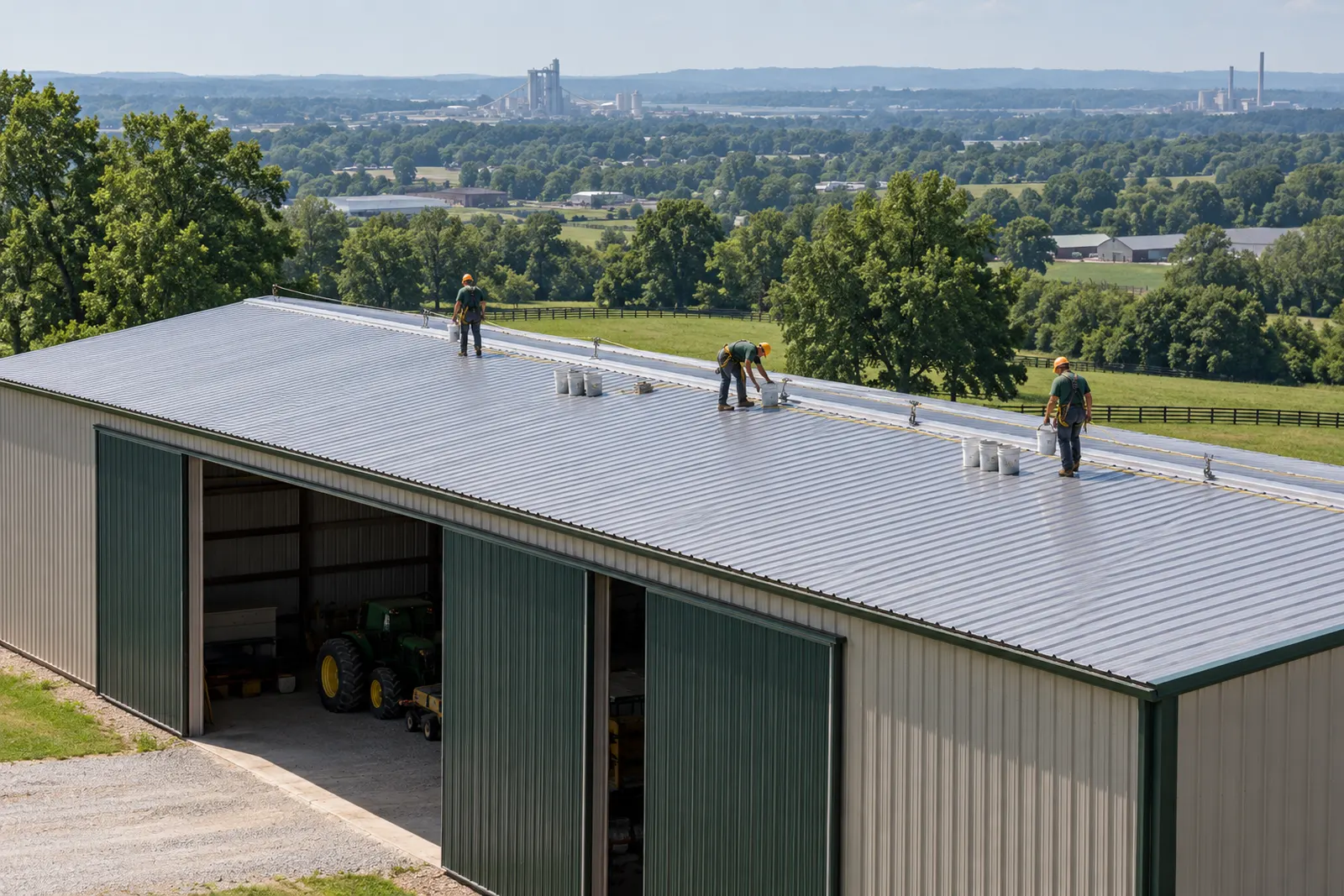
Crew working across the metal roof of a large equipment building with open bay doors
Whole Roof

Foam And Topcoat

Clean and prime the panels, spray closed-cell foam to the planned thickness, then apply a coating to shield the foam from sunlight. This fits buildings that need insulation across the whole roof.

Silicone topcoats over foam
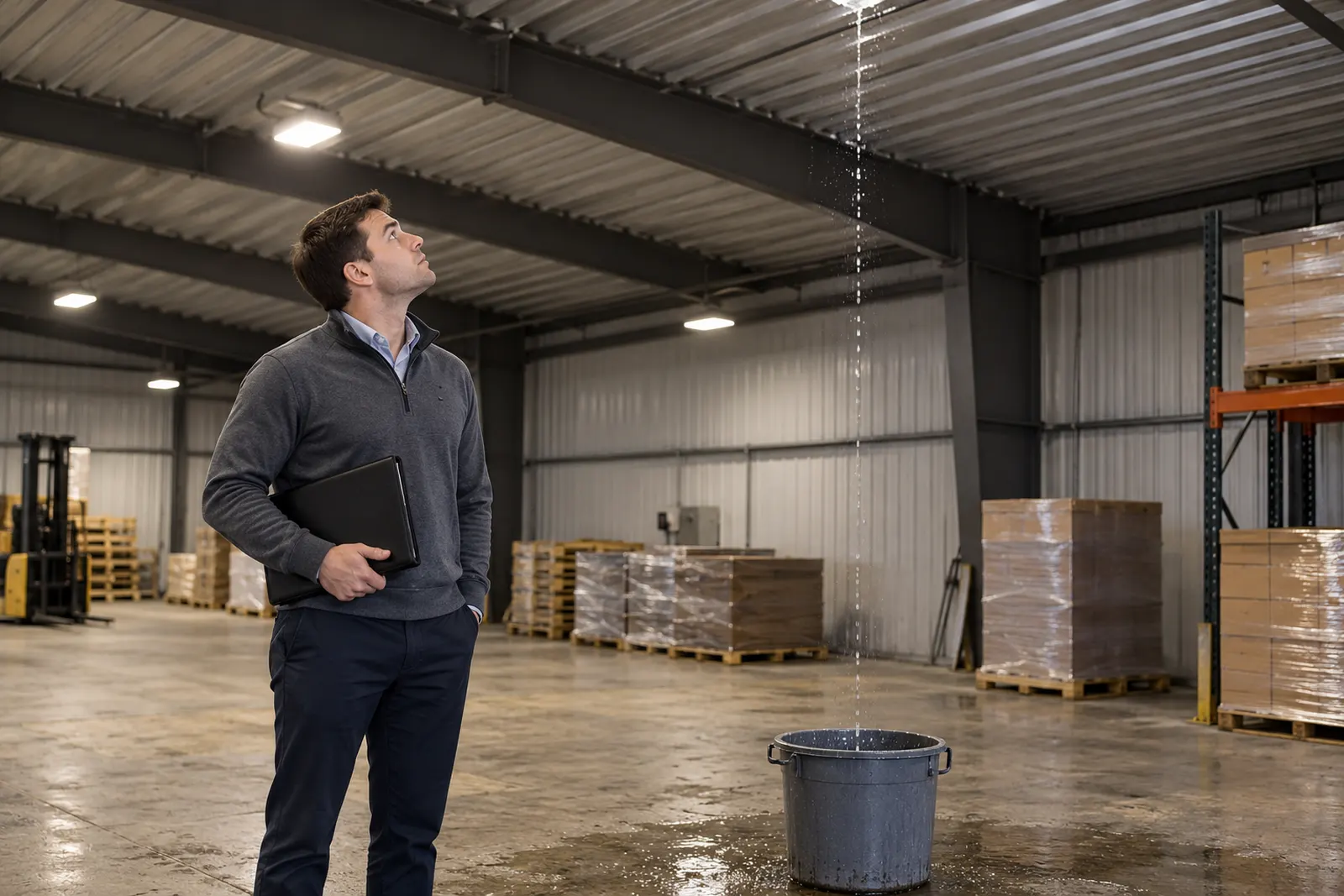
Facility manager looking up at a roof leak dripping into a bucket inside a metal warehouse
Leaking And Sweating

Foam Over Problem Sections

Sections over offices, break rooms, or equipment that drip from leaks or condensation get foam, while the rest of the roof takes a metal coating.

Metal coating for the rest
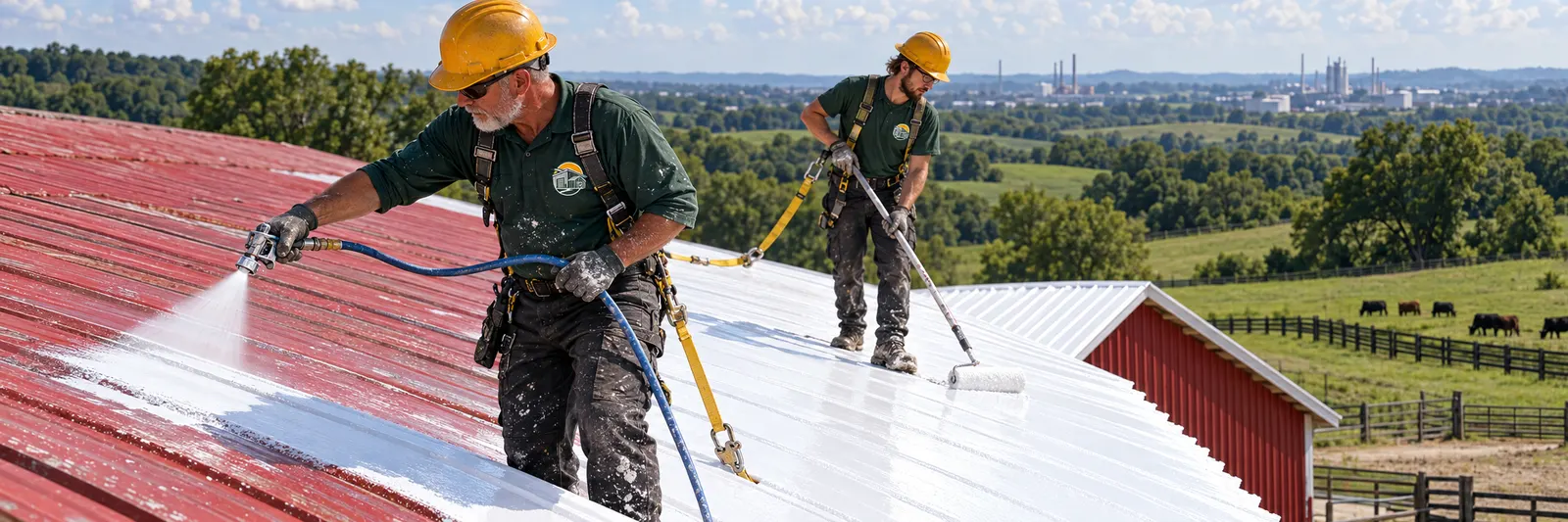
Crew in logo shirts spraying and rolling white coating over a rusty red metal roof near Georgetown, KY
Recoat Over Foam

Foam Topcoat Renewal

Existing foam roofs get cleaned, checked for soft or damaged spots, patched, and given a fresh topcoat to keep sunlight off the foam.

Benefits of Coating Your Roof

Qualified benefits of foam over a metal roof in good structural shape.

Insulation Added From Above

Closed-cell foam runs about R-6 per inch, per DOE Building America, so a metal building gains insulation without work inside the building.

Every Screw Covered

Foam buries fasteners and laps under a single layer, which removes hundreds of small leak points that a coating would otherwise seal one at a time.

Water Steered To Gutters

Tapered foam fills low spots so water drains toward the gutters instead of sitting on dented or sagging panels.

Less Condensation Below

Insulating the panels from above keeps their underside warmer in cold weather, which cuts the condensation that drips on stock and equipment.

Building Too Hot Or Too Cold?

Tell us how the building is used, whether it has insulation now, and where the roof leaks. Those three answers tell us whether foam belongs on your roof.

How A Spray Foam Roof Goes On

Five steps from the first walk to a finished topcoat, with edges and code points planned up front.

Spray Foam Roofing · GeorgetownWork Order
  1. Step 1: Inspect Your Roof

    We confirm the panels and purlins are solid, check for wet insulation from inside, and measure where water collects. Edge heights at doors, walls, and gutters are noted for the foam thickness.

    On The Roof
    Roofer inspecting fasteners and seams on a metal roof before coating
  2. Step 2: Plan Thickness And Code

    Foam thickness, fire classification of the assembly, recover rules, and edge metal wind resistance are checked against the Kentucky Building Code and the maker listings before ordering material.

    Paperwork
  3. Step 3: Clean, Prime, And Protect

    Panels are washed and primed, screws are tightened, and intakes, vehicles, and walls near the work are covered against overspray. Rooftop units are shut down at their disconnects.

    At The Building
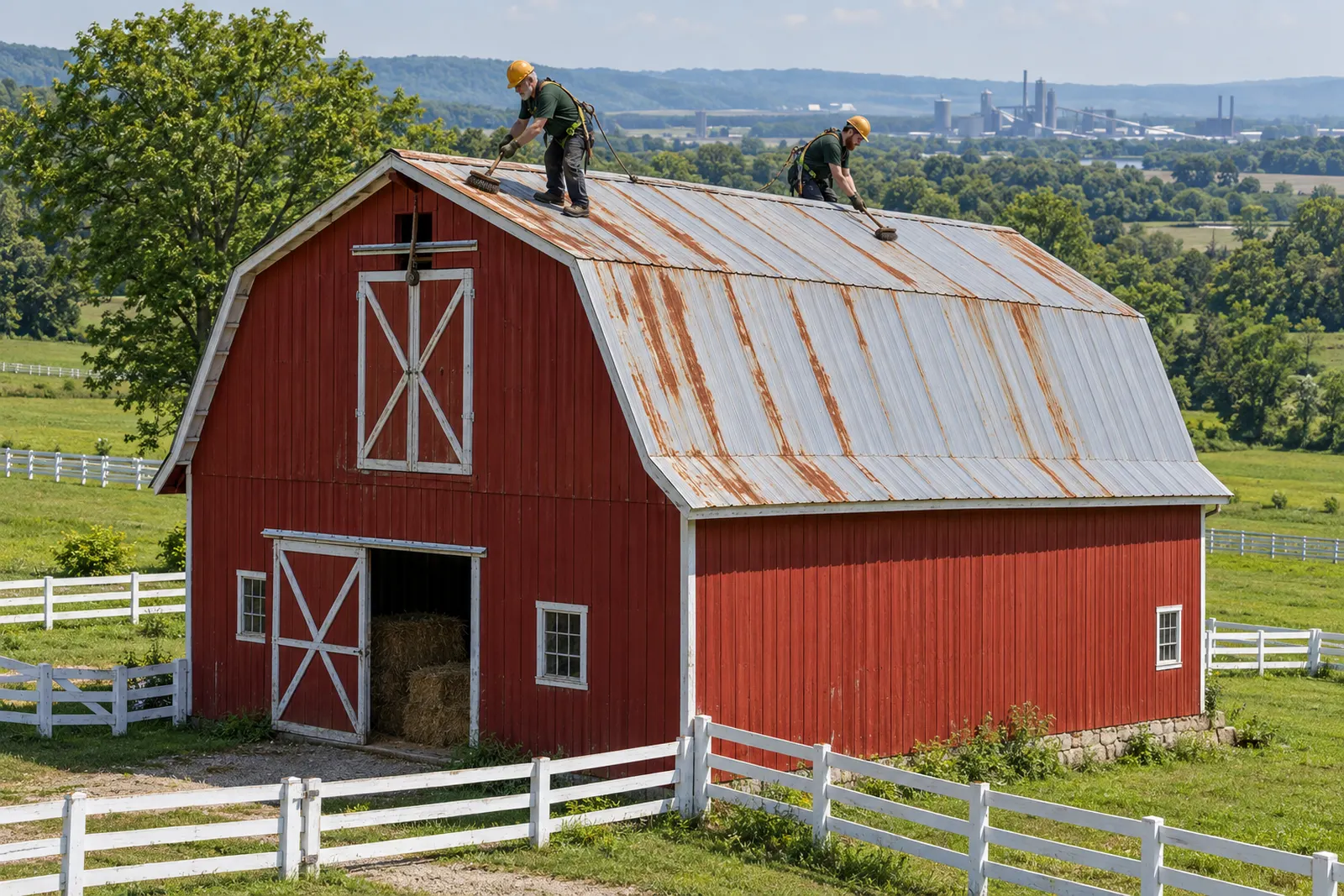
    Crew prepping the rusty metal roof of a red gambrel barn before primer
  4. Step 4: Spray The Foam

    Passes of foam build to the planned thickness, with extra taper in low spots. The surface is checked for even texture before the topcoat goes on.

    On The Roof
  5. Step 5: Topcoat And Re-Trim

    A coating goes over the foam to protect it from sunlight, then gutters, ridge caps, and trim are adjusted to the new roof height.

    On The Roof

Related Coating Services

Foam pairs with a coating, and some buildings need only the coating.

Metal Roof Coating

Metal roof coating is the lighter option when the building already has enough insulation and only the screws and laps leak.

Metal Roof Coating in Georgetown

Spray Foam Roofing Questions

Insulation, code, thickness, and topcoats for foam over Georgetown metal buildings.

Should foam go over a metal roof instead of a coating alone?

Foam suits metal buildings that run hot or cold inside, because it adds insulation and fills the panel corrugations. A coating alone seals and reflects without adding much R-value, which suits buildings where the panels just leak. Closed-cell foam runs about R-6 per inch, per DOE Building America, and inches of it raise edges and trim.

Which building code covers foam over a metal roof in Kentucky?

The Kentucky Building Code, published by the Kentucky Department of Housing, Buildings and Construction, covers commercial roofs statewide, including recover work over metal. The points that come up most are fire classification of the foam assembly, recover rules for layers over an existing roof, wind resistance of edge metal and trim, and insulation requirements. Local inspectors enforce it.

Does foam need a permit in Georgetown?

Foam over metal is more likely to need a permit than a coating-only job, because it adds insulation and raises the roof edge. Inside Georgetown, call Georgetown Building Inspection with the roof area, panel type, and foam thickness. Buildings in Woodford, Harrison, or Grant County start with their county inspector instead.

How thick does the foam go on?

Thickness is set by the insulation goal, the drainage taper, and the maker listings for the assembly. Foam is sprayed in passes, and low spots get extra so water drains toward the gutters. The planned thickness is written into the work order, and edge trim is sized to match before spraying starts.

What protects the foam from the weather?

A coating over the top. Sunlight breaks down bare foam, so a silicone or acrylic topcoat goes on once the foam is sprayed and checked. The topcoat is the part that wears, and recoating it on schedule keeps the foam underneath protected.

Can foam go on while the building is in use?

Yes, with planning. Overspray is the main concern, so rooftop unit intakes near spraying are shut off, vehicles under the work are moved, and nearby walls and windows are covered. Work is done in sections on calm days, and staff keep working inside while the crew sprays above.

Ask About Foam For Your Metal Building

Tell us how the building runs in summer and winter, and we will follow up with a roof walk and a free estimate.

Call Us (502) 293-5467