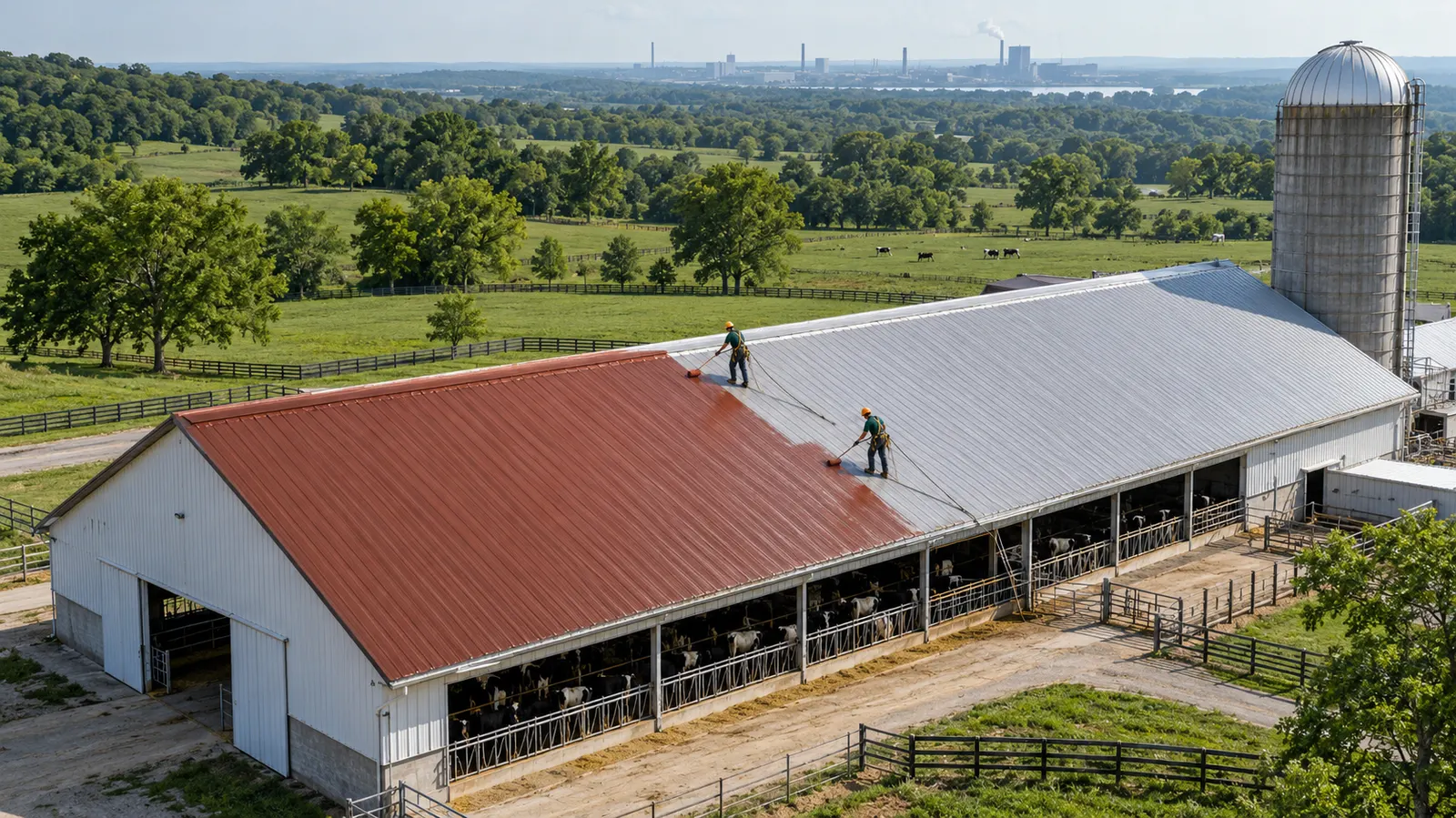
Gabled Roofs
Full Acrylic System
Wash, treat rust, seal screws and laps, then acrylic base and topcoats over the whole slope. This is the common choice for shops, barns, and pre-engineered warehouses that drain well.
Metal roof prep explained
Acrylic roof coating for Georgetown shops, barns, and warehouses with enough pitch to shed water fast: a water-based, bright white finish that recoats easily.
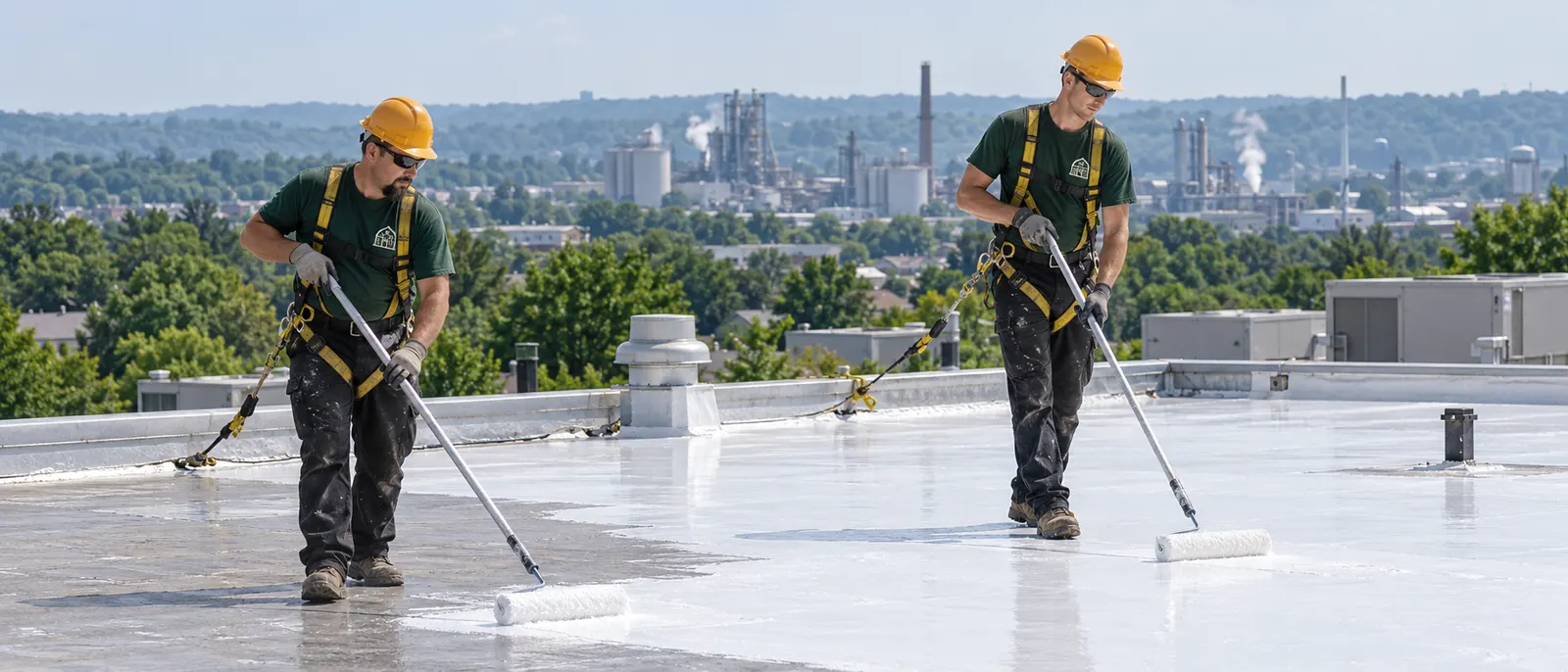
Acrylic does its best work on roofs that drain quickly and on days that stay dry. These lists show where it fits and where another system wins.
Acrylic needs a dry, drained surface. These five parts of a pitched metal roof decide whether a section takes acrylic or something else.
Any panel that holds water longer than a few hours is marked. Acrylic softens under ponding, so those spots get silicone or a framing fix while the rest of the slope takes acrylic.
Rusted or loose screws are replaced or tightened and sealed before coating. A detail coat over each head gives the thin acrylic film a solid edge at every fastener.
Side laps, end laps, and ridge caps get fabric or tape. Pitched roofs shed water fast, yet wind-driven rain still finds open laps near the ridge and at building corners.
Dew sits on metal panels well after sunrise, especially on north-facing slopes. Coating starts only once the surface is dry, which shapes the work day on every acrylic job.
Rain on a fresh acrylic coat washes it off. Coating days are picked from the forecast, and spring and fall jobs leave dry hours after each pass for the film to set.
Three ways acrylic is used on Georgetown metal buildings.
Wash, treat rust, seal screws and laps, then acrylic base and topcoats over the whole slope. This is the common choice for shops, barns, and pre-engineered warehouses that drain well.
Metal roof prep explained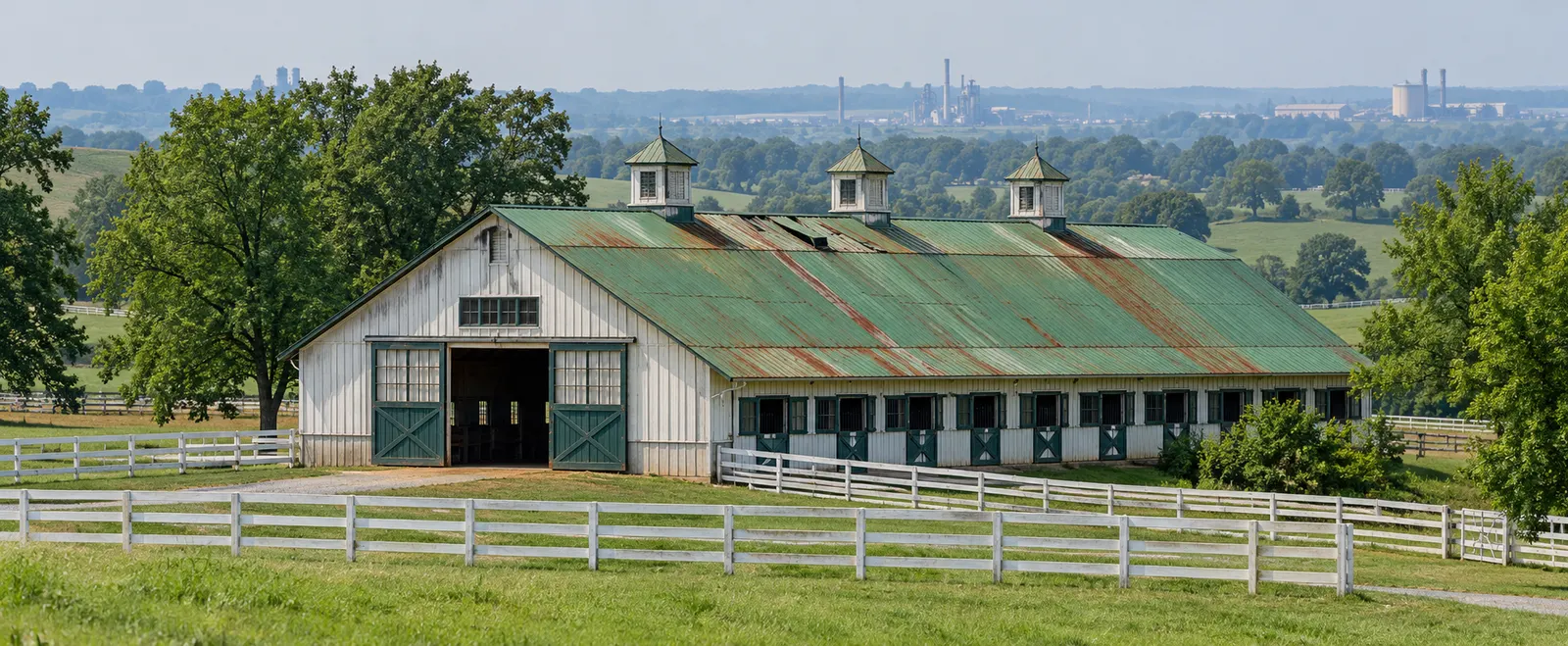
Buildings with a pitched field and wet gutter lines get acrylic on the slope and silicone along the low panel courses, each product where it performs best.
Silicone for wet edges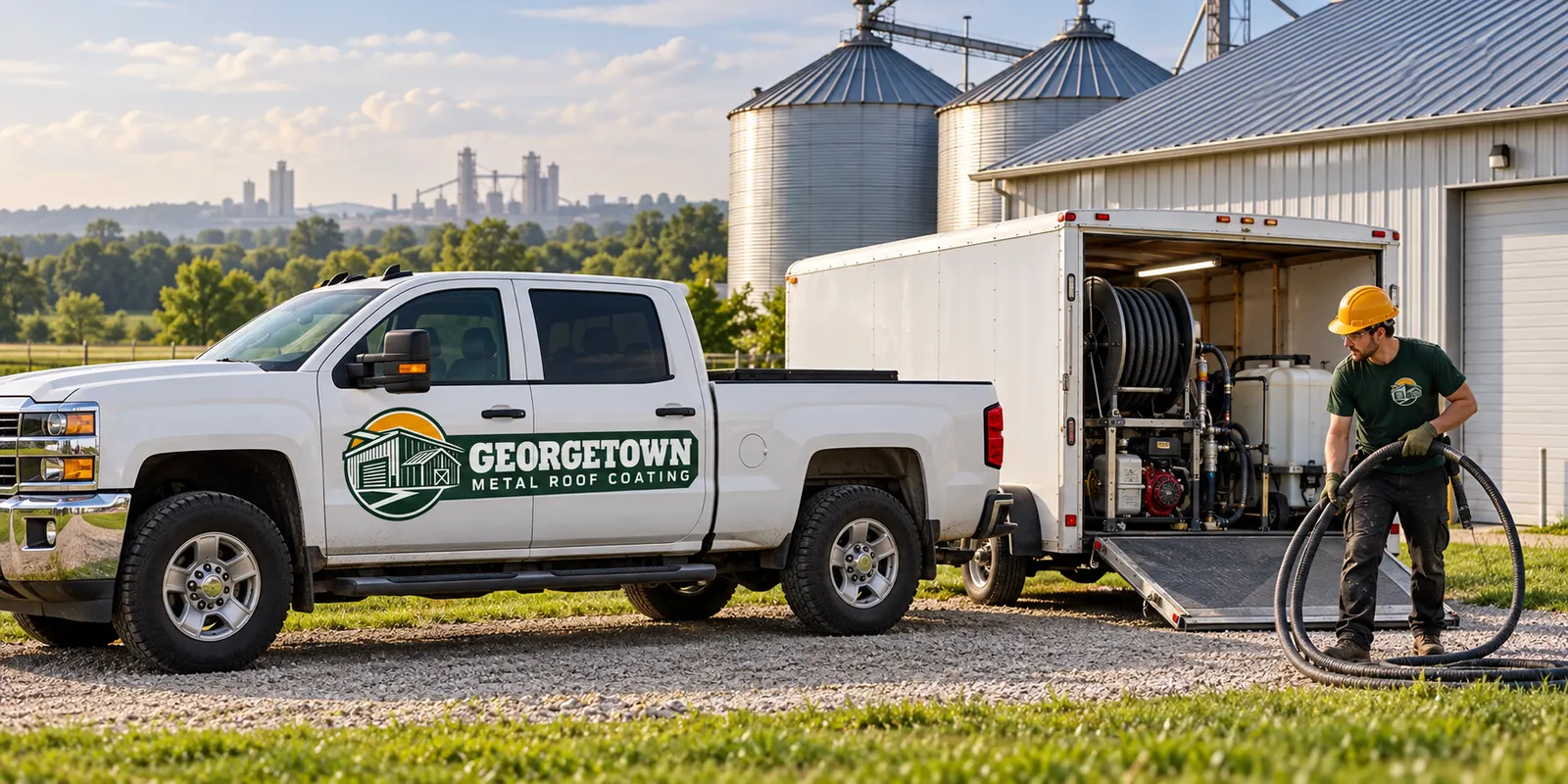
A worn acrylic roof gets washed, spot-repaired, and topcoated again. Acrylic accepts many topcoats, so recoats stay straightforward as long as the base film is still bonded.
Qualified benefits of acrylic on a pitched metal roof that drains well.
White acrylic reflects more sunlight than faded or rusty steel. The Cool Roof Rating Council lists measured reflectance for rated products, including aged values after dirt builds up.
Acrylic holds its white color and sheds dirt better than silicone, which matters on roofs visible from the road or from upper-floor windows.
Water-based acrylic cleans up with water and keeps odor down, a real advantage over offices, shops, and barns that stay occupied during the work.
Later recoats are mostly a wash, spot repairs at screws and laps, and a fresh topcoat, since acrylic accepts many topcoats over the original film.
Dry stretches fill up fast in central Kentucky. Request an estimate now and the roof walk, prep, and coating days can be lined up with the forecast.
Five steps, timed around dry weather, with screws and laps sealed before any acrylic goes on.
We check pitch and drainage across each slope, mark any panel that holds water, and look at screws, laps, ridge caps, and gutters. Rust is graded so prep time can be planned.
On The Roof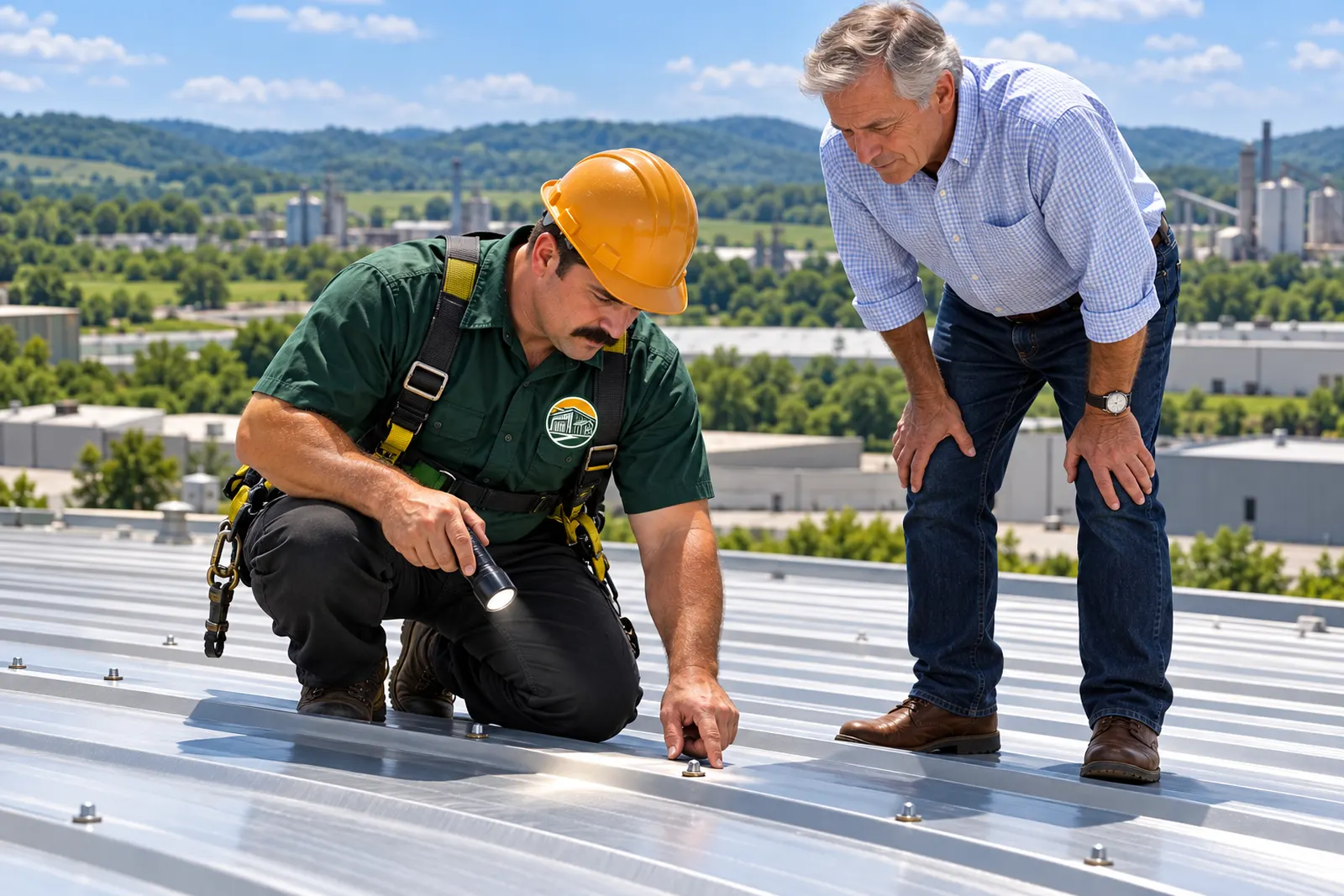
Pressure washing with a cleaner matched to acrylic removes dirt and chalking paint. Rinse water carrying paint chips is caught at gutters and downspouts, and the panels dry fully before priming.
On The Roof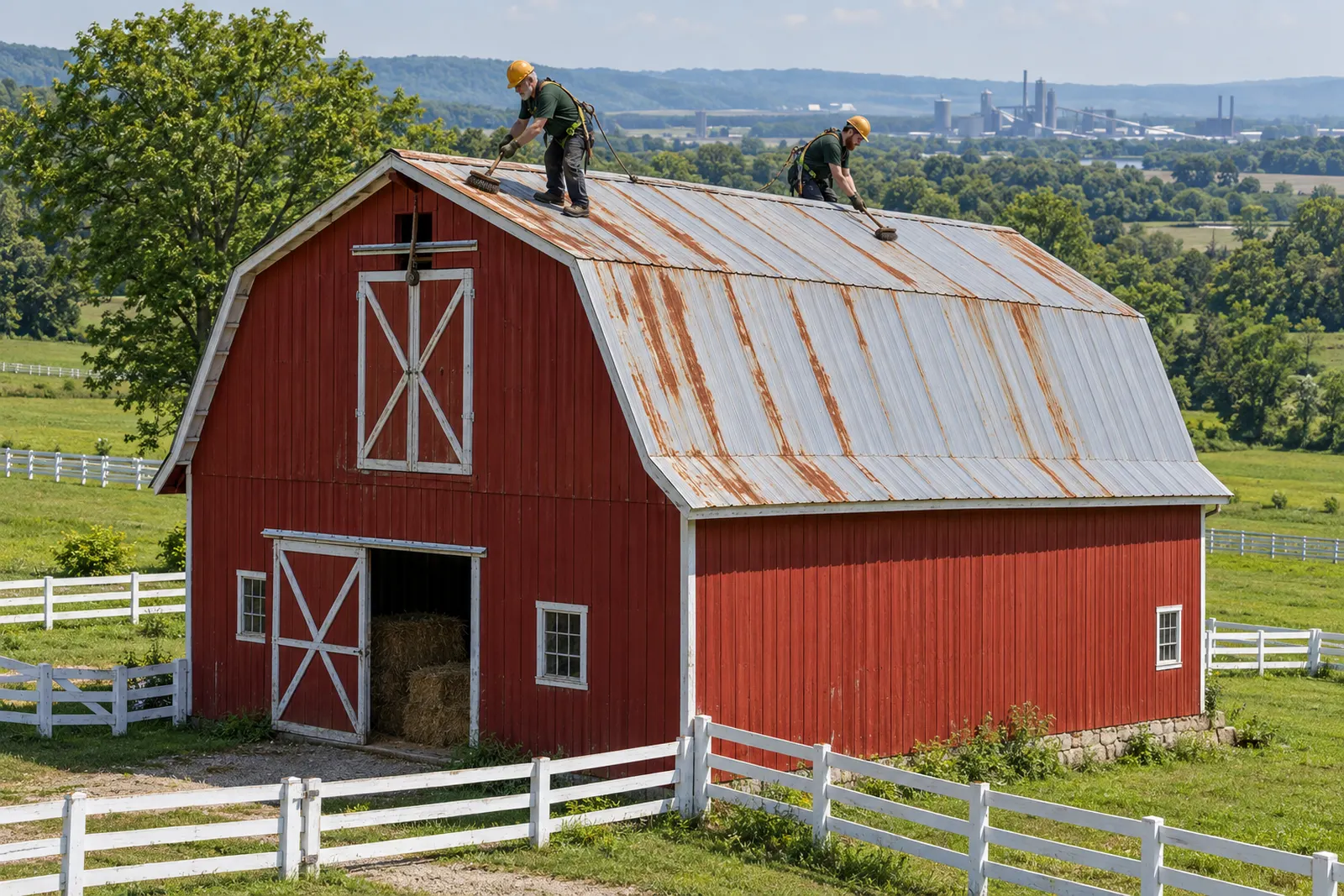
Rust gets a rust-inhibiting primer, and galvanized panels get the bonding primer the maker names. Screws are sealed and laps get fabric so the acrylic film has solid joints to cover.
On The RoofBase coat and topcoat go on once dew has burned off, with dry hours left before evening. In July and August, work shifts to mornings so hot panels stay within the product limit.
At The BuildingGauge readings, product names, and photos of each slope go to the owner. That record makes later acrylic recoats simple to plan and match.
PaperworkAcrylic often works next to another system on the same roof.
Silicone covers the wet gutter lines and flat spots that acrylic should stay off, often on the same building.
Metal roof coating explains the screw, lap, and rust work that comes before any topcoat on a steel roof.
Spray foam adds insulation under the topcoat for metal buildings that run hot even after a white coating.
Weather, finish, and recoats for acrylic over Georgetown metal roofs.
When the roof has enough pitch to shed water quickly, as on gabled shops, barns, and pre-engineered warehouses. Water-based acrylic stays bright white and cleans up with water, which keeps upkeep simple. It needs a stretch of dry weather to cure, so spring and fall jobs watch the forecast closely, and it is a weak choice where water collects.
It lowers the roof surface temperature on sunny days by reflecting more sunlight than faded or rusted steel. The Cool Roof Rating Council directory lists measured solar reflectance and thermal emittance, including aged values, so products can be compared. Kentucky has real winters, so the payoff is largest on buildings cooled all summer or holding heat-sensitive work.
Rain on fresh acrylic can wash it off before it sets, which is why coating days are chosen from the forecast and each pass is timed with dry hours behind it. If a shower hits anyway, the area is checked once dry, and any thin or washed spots are cleaned and recoated before the job is closed out.
Yes, once chalky paint and dirt are washed off and the surface passes an adhesion check. Factory paint that has faded still gives acrylic a good base after cleaning. Peeling paint is scraped back to a firm edge, and bare or rusted spots get primer before the acrylic goes on.
Water-based acrylic has a low odor compared with solvent products, which is why it is often picked for barns and occupied shops. Animals and feed are still moved away from the drip line during washing and spraying, and air intakes on rooftop units near the work are shut off while coating is applied.
Yearly checks show it. Look for coating worn thin at panel ribs and walkways, chalking that rubs off on your hand, cracks at ridge caps, and rust returning at screw heads. Small spots are cleaned and recoated with the same product, and a full topcoat is planned when wear spreads across the field.
Tell us about the roof pitch and where it leaks, and we will set up a roof walk and a free estimate.
Leave a name and number and we will call to talk through the leak, rust, or coating question. Or call us now at (502) 293-5467.