Gutter Lines
Gutter Rebuild And Coating
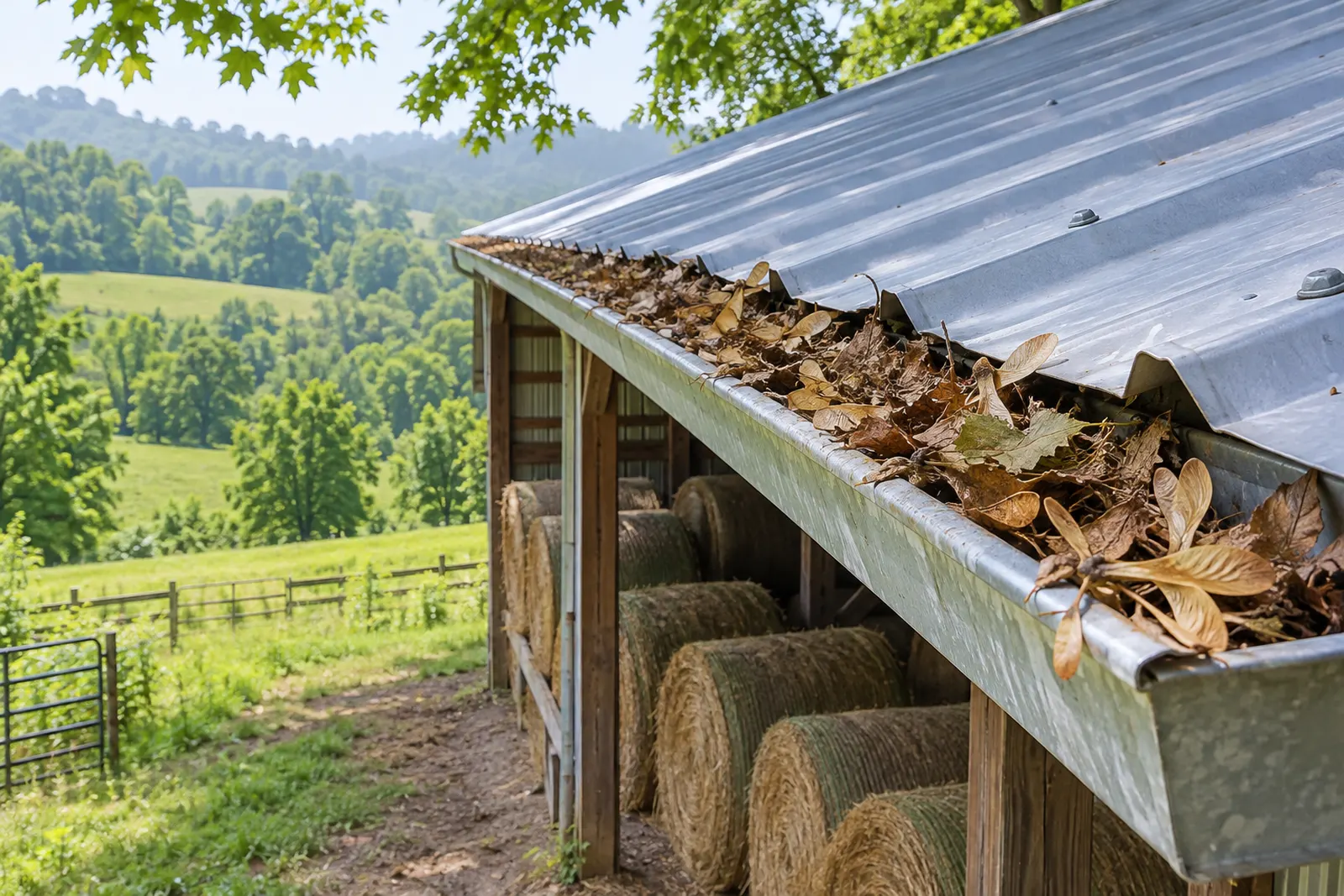
Rusted gutters are cleaned, split seams treated, and interiors coated, with undersized sections or blocked outlets fixed before the roof field is coated.
Metal roof coating details
Cynthiana metal roof coating for commercial buildings near the South Fork of the Licking River, with gutters, outlets, and downspouts sized to carry hard storms away.
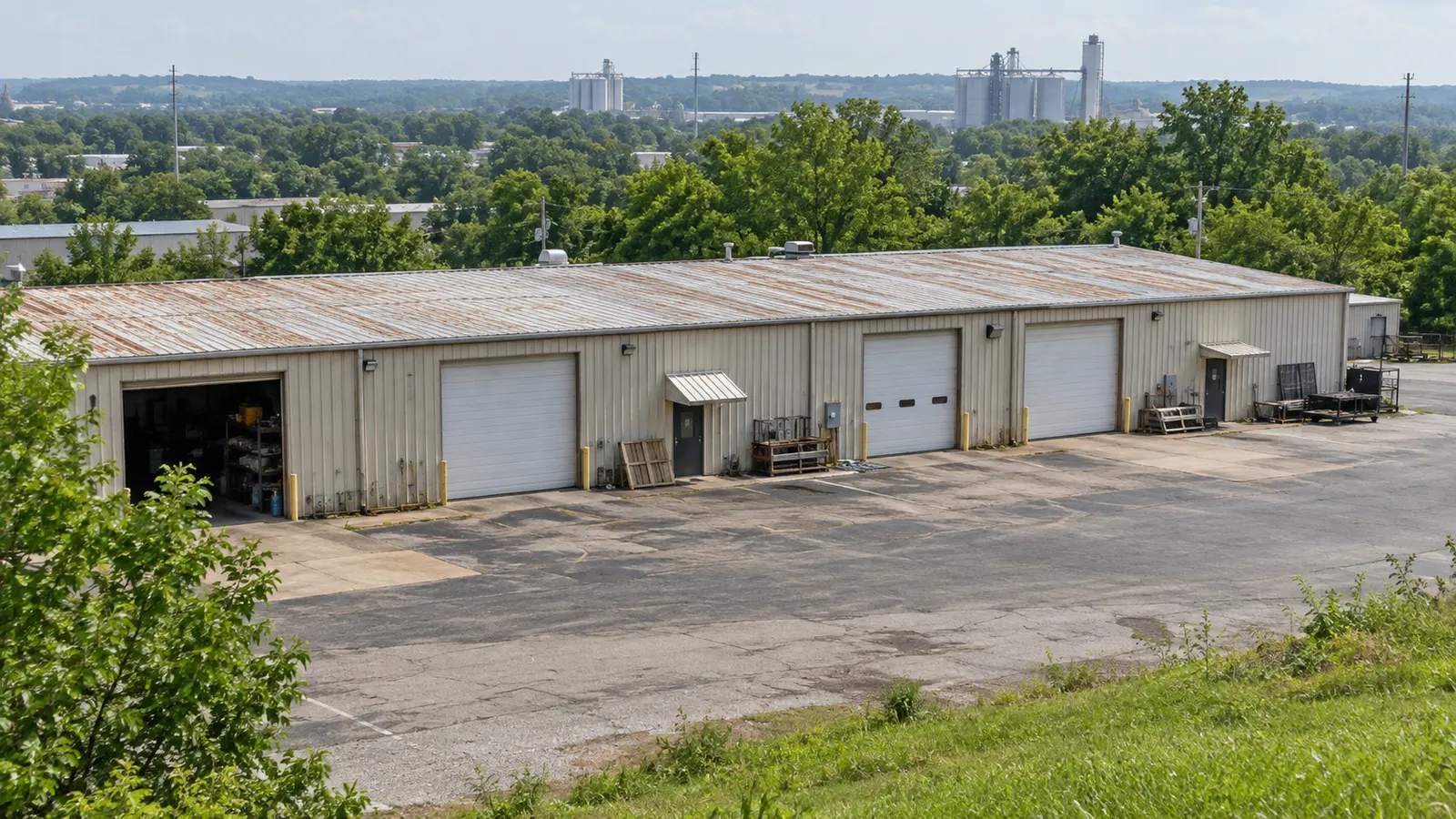
A coated roof still has to hand its water to something. On commercial buildings near the South Fork of the Licking River in Cynthiana, the gutters, outlets, and downspouts decide whether a hard storm ends up in the drain line or against the foundation.
Before larger roof projects, owners confirm flood plain status with the county. On the roof walk we size the gutters against the panel area they serve, clear the outlets, and note where every downspout empties.
Storm water passes through five parts of a metal roof on its way to the ground. Each one gets attention before the coating.
Heavy rain sheets down long panel runs and collects at end laps on its way to the eave. Laps are sealed full width so a fast flow stays on top of the joint.
Gutters undersized for the roof area overflow in hard storms and dump water against the wall. Where a gutter falls short, larger sections or added outlets are recommended before coating.
Packed outlets back water up into the gutter and under the eave trim. Each outlet is cleared, its seams are treated and coated, and crushed downspouts are replaced.
Damp air on low ground near the river speeds rust at the bottom panel course and eave trim. Rust-inhibiting primer there is time well spent before the field coat.
Wall panels and trim close to the ground stay damp after storms. They are checked for rust on the roof walk, since water off the roof lands right beside them.
What a coating and a working gutter line do for a Cynthiana building.
Sealed end laps and side laps stand up to the fast sheets of water that run down long panels during a storm.
Coating the gutter interiors and outlet seams stops the rust that splits gutters at their joints.
Primed and coated lower panel courses resist the damp air that lingers on low ground near the river.
Cleared outlets and redirected downspouts keep roof water from pooling at foundations and wall panels.
Three jobs we see most on Cynthiana commercial buildings.
Rusted gutters are cleaned, split seams treated, and interiors coated, with undersized sections or blocked outlets fixed before the roof field is coated.
Metal roof coating details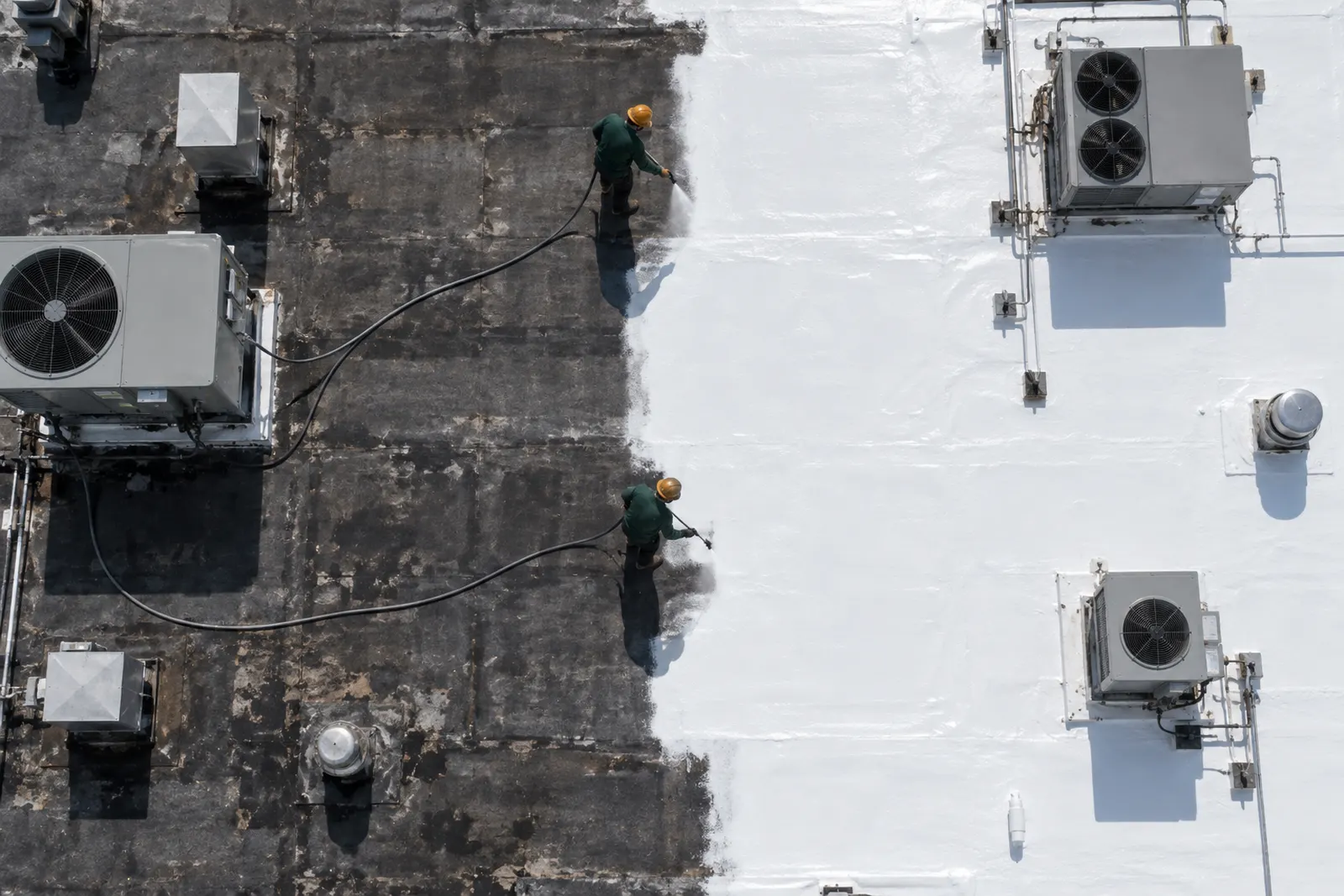
Flat or low-pitch commercial roofs that hold water near the gutters take silicone, which resists ponding while the drainage work moves water off faster.
Silicone coating details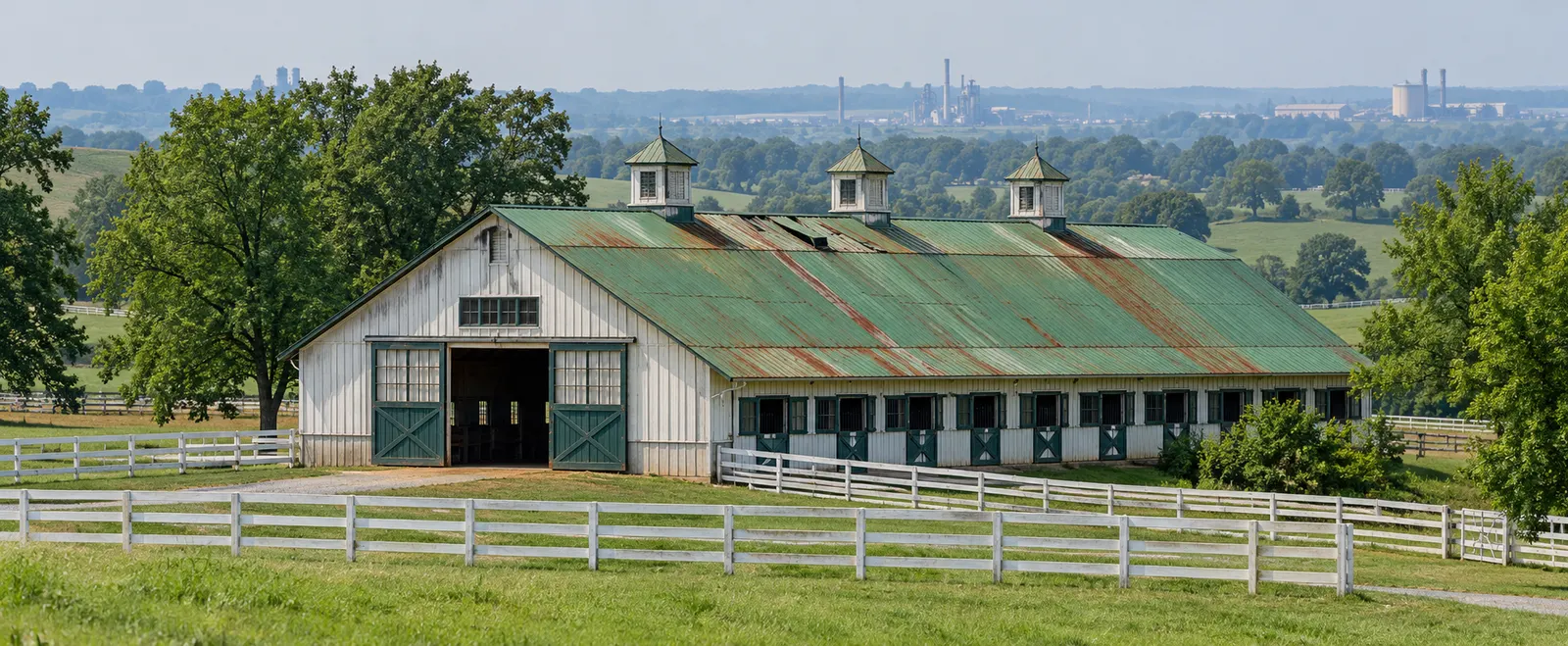
Older shops and storage buildings with rust along the eaves get grinding, rust primer, screw replacement, and a two-coat system.
Acrylic for pitched sectionsTell us where water spills over and where the downspouts empty. We will check the gutters, outlets, and laps on the roof walk before talking coating.
Five steps, with the drainage path worked out before the coating goes on.
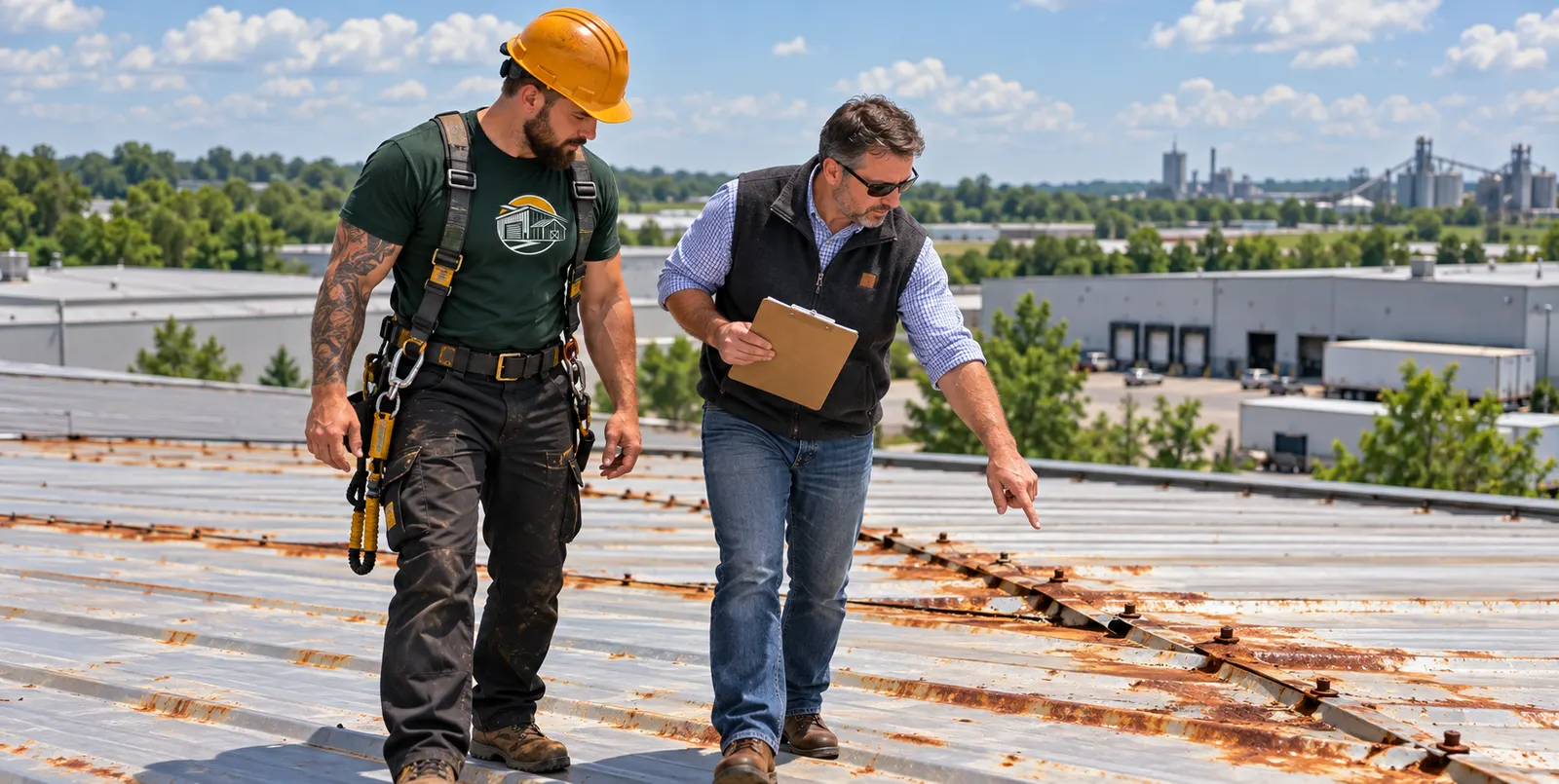
We walk the panel field and laps, measure the roof area each gutter serves, check outlets and downspouts, and look at wall panels near grade. Inside, stains show where overflow has been getting in.
On The Roof
Owners confirm flood plain status with the county before larger work. The Harrison County local building inspector is the first call for permits, with the roof area, panel type, and coating system in hand.
PaperworkOutlets are cleared, split gutter seams treated, undersized sections flagged for replacement, and downspouts redirected away from foundations.
At The Building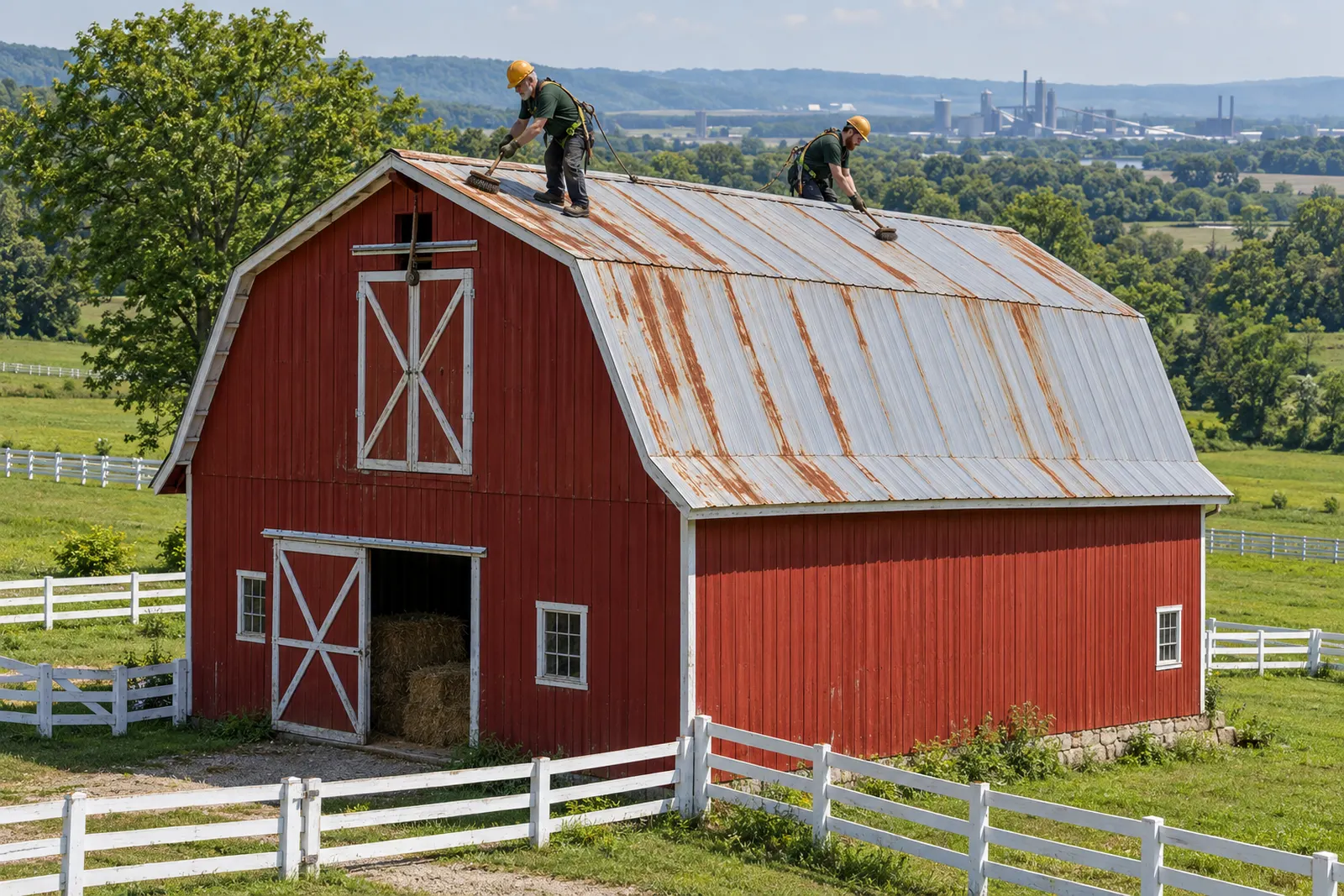
Rust at the eaves gets primer, screws and laps are sealed, and the base coat and topcoat go on across the field and gutter interiors.
On The RoofPhotos of each gutter run and roof section, gauge readings, and product names go to the owner for future storm checks.
PaperworkBuilding beyond Cynthiana? Call us or send us a message. We coat commercial metal roofs across these nearby towns as well.
| Town | County | What We See On Roofs There |
|---|---|---|
| GeorgetownHome Base | Scott County | Large industrial and shop roofs coated in sections around shifts and loading docks. |
| Midway | Woodford County | Working barns and sheds where washing is timed around animals and feed. |
| Williamstown | Grant County | Grant County buildings whose coating days follow the Wilmington forecast. |
Permits, drainage, and storm prep for Harrison County buildings.
The Harrison County local building inspector, listed by the Kentucky Department of Housing, Buildings and Construction with a county planning office contact, is the first call. A state building inspector is also assigned to the county. Ask how the office treats coating-only work versus panel replacement, and give it the roof area, panel type, and coating system.
Flood plain status and drainage. Buildings near the South Fork of the Licking River should confirm flood plain status with the county before larger roof projects and keep roof water moving away from foundations. Gutters and downspouts sized for heavy storms, clear outlets, and primer at the damp lower panel courses come first.
Electrical work, such as reconnecting rooftop unit wiring after curb repairs, goes through the county judge executive office or the city office where the work happens. On coating jobs we shut units off at their disconnects, and any rewiring stays with a licensed electrician and the right office.
Watch them in a hard rain. Water spilling over the front edge while the outlets run clear means the gutter is too small for the roof flow; spilling with packed outlets means a cleaning problem. On the roof walk we compare gutter size and outlet count with the roof area each run serves.
It helps when the leak comes from rusty steel, open end laps, or split gutter seams, because those get primed, sealed, and coated. When water comes from gutters overflowing back under the trim, the fix is drainage first: bigger gutters, more outlets, or cleared downspouts.
Blue Grass Energy lists Harrison County in its service area, though the meter location and the name on the bill decide it. For a roof job, the main concern is shutting rooftop units off at their disconnects before work starts nearby.
Request a free estimate and tell us where the gutters overflow, and we will check the whole drainage path on the roof walk.
Leave a name and number and we will call to talk through the leak, rust, or coating question. Or call us now at (502) 293-5467.